Protocol

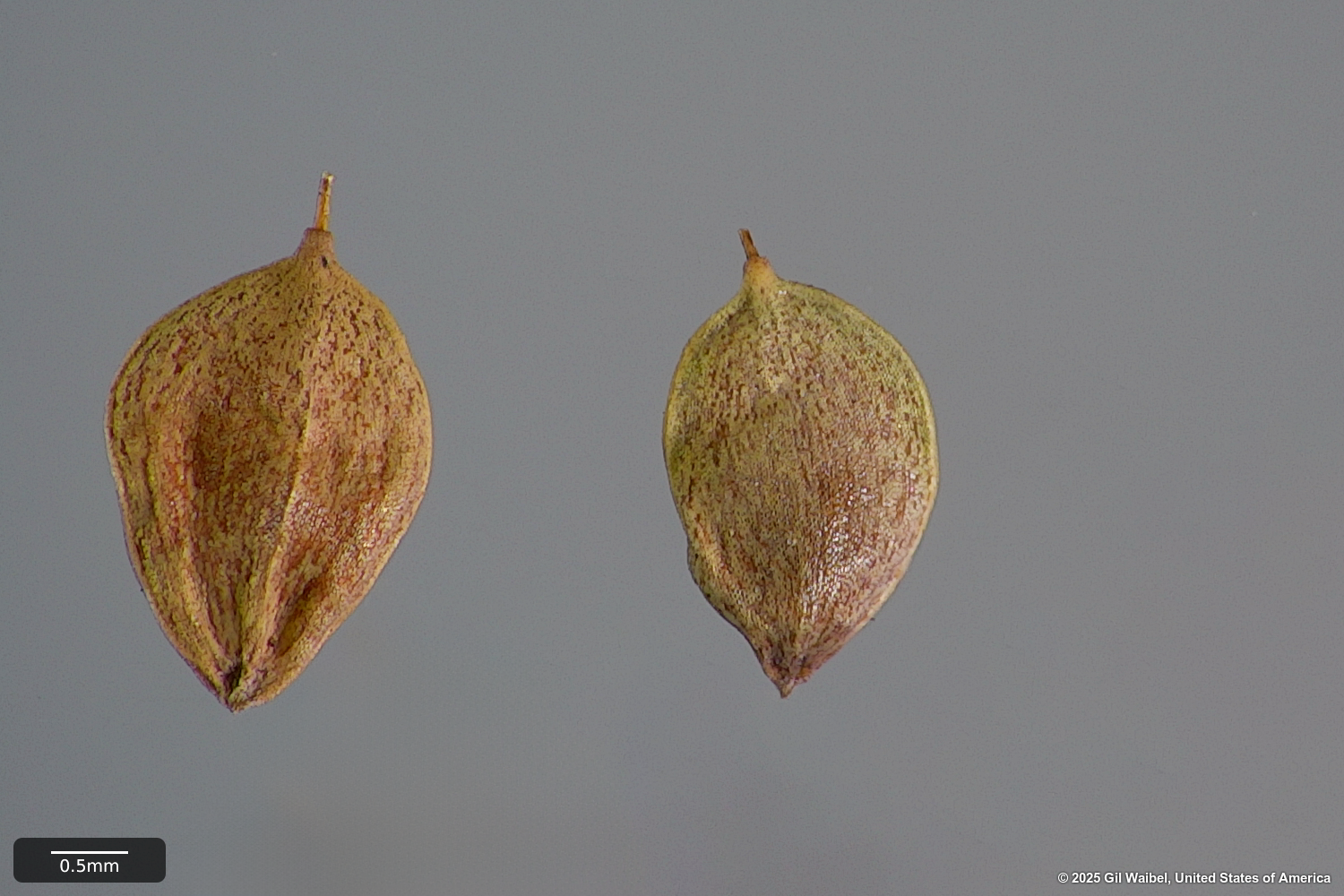
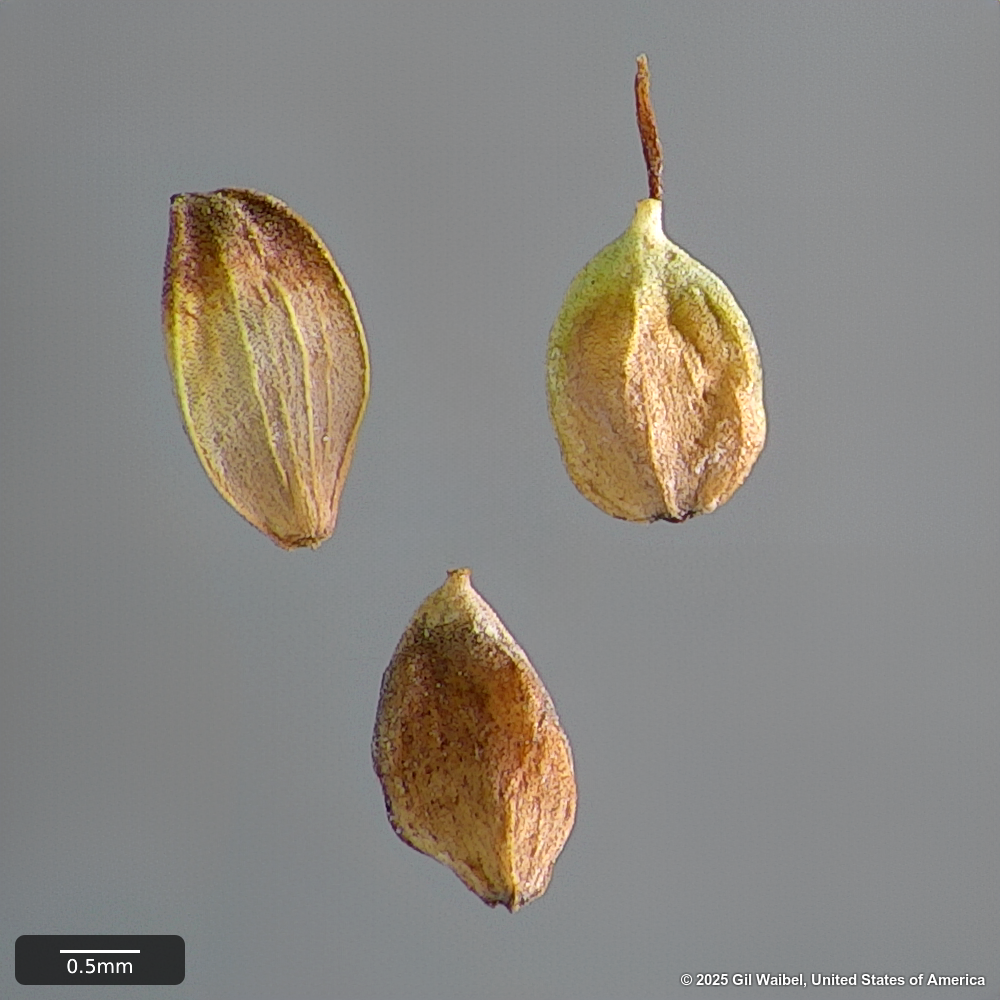
Carex aquatilis

Overview

Genus

Carex

Family

Cyperaceae

Synonyms
Carex aquatilis var. pulchella, Neskiza aquatilis, Vignea aquatilis
Common names
leafy tussock sedge, long-bracted tussock sedge, norrlandsstarr, wasser-segge, water sedge

    Purity

    Purity working weight 1.2 g
    Other species (OSD)/Noxious working weight 12 g
    ISTA PSD
    AOSA PSU

    Germination and dormancy breaking method

    About this Method

    Applicable for:

    Media Agar or paper: top of blotters in tight moisture containing box
    Moistened with H2O normal moisture level
    Additional dormancy breaking process Not needed
    Germination Temperature 20°C
    Day/Night Temperature 12 and 12 °C
    Hours Light/Dark 12 and 12 °C
    Days in warm 14 days

    No images found.

    Seedling evaluation

    Normal Seedlings

    CYPERACEAE (Seedling type A; Seedling Group A-1-1-1-1 adapted from ISTA):

    Monocotyledons with epigeal germination without epicotyl elongation; the primary root is essential. The seedling part that grows towards the light and becomes green is the cotyledon.

    Representative genera include: Carex, Cyperus, Eleocharis, Scirpus

    Normal seedlings: all essential structures are normal, as detailed in the following:

    • The primary root is intact or shows acceptable defects (discolored or necrotic spots, healed cracks and splits, superficial cracks and splits not affecting the conducting tissues)
    • The cotyledon is intact or shows acceptable defects (discolored or necrotic spots, loose twists)
    • The terminal bud and surrounding tissue (usually not visible) is intact

    seedling, seedlings

    • Seedling. A young plant developing from the embryo of a seed. Association of Official Seed Analysts (AOSA) Rules for Seed Testing, Volume 4, 2019

    monocotyledon, monocotyledons

    • Monocotyledon. Plant having one cotyledon, as in the grass. Fenwick, J.R. revised 1995. Laboratory Manual for General Crops- Glossary. Unpublished class notes. Dept. of Soil and Crop Sciences, Colorado State University. Pages 104-111

    epigeal, epigeal germination

    • Epigeal. Cotyledons borne above the ground after germination (see hypogeal). Fenwick, J.R. revised 1995. Laboratory Manual for General Crops- Glossary. Unpublished class notes. Dept. of Soil and Crop Sciences, Colorado State University. Pages 104-111

    • Epigeal germination. A type of germination in which cotyledons are carried above soil level by the elongating hypocotyl (see hypogeal germination). Association of Official Seed Analysts (AOSA) Rules for Seed Testing, Volume 4, 2019

    epicotyl, epicotyls

    • Epicotyl. In Dicotyledons and gymnosperms, the epicotyl includes all seedling structures above the cotyledons. In species with epigeal germination (e.g. Phaseolus vulgaris), the epicotyl, cotyledons and part of the hypocotyl emerge from the soil. In species with hypogeal germination (e.g. Pisum sativum), only the epicotyl emerges, carrying the first foliage leaves above the soil surface. In these species, the epicotyl also bears one or more scale leaves. Dormant meristematic buds in the axils of these scale leaves become active if there is damage to the terminal bud. The conducting tissue of the epicotyl transfers water and nutrients from the hypocotyl and cotyledons to the leaves and terminal bud above. Association of Official Seed Analysts (AOSA) Rules for Seed Testing, Volume 4, 2019

    • Epicotyl. The stem of the embryo or young seedling above the cotyledons. Fenwick, J.R. revised 1995. Laboratory Manual for General Crops- Glossary. Unpublished class notes. Dept. of Soil and Crop Sciences, Colorado State University. Pages 104-111

    primary root

    • Primary root. The root that develops directly from the hypocotyl of the embryo. Fenwick, J.R. revised 1995. Laboratory Manual for General Crops- Glossary. Unpublished class notes. Dept. of Soil and Crop Sciences, Colorado State University. Pages 104-111

    cotyledon, cotyledons

    • Cotyledon. The first leaf or pair of leaves of an embryo and seedling, often a food-storage organ. The cotyledons may remain in the seed (hypogeal germination) or emerge to become the first photosynthetic organs (epigeal germination). ISTA Handbook on Pure Seed Definitions, Glossary. 3rd Edition 2010.

    • Cotyledons. The cotyledons are the storage structures of the embryo. They may be only a small portion of the seed in species with endosperm, perisperm or female gametophyte storage tissue, or they may occupy a large portion of the embryo when they are the primary storage tissue (e.g. Phaseolus vulgaris). In epigeal species, the cotyledons may grow quite large and become the first photosynthetic structures of the young plant. In hypogeal species the primary function of the cotyledons is to provide nutrients to the growing seedling until it can produce its own nutrients. In most species the cotyledons shrivel and drop off as their reserves are depleted. In a few species (e.g. Cucurbita pepo, pumpkin) the cotyledons may persist well beyond the seedling stage of growth. In the monocotyledons the cotyledon absorbs nutrients from the endosperm and transfers them to the growing seedling. In the Poaceae the cotyledon is called the scutellum. It is in close proximity to the endosperm and is laterally attached to the embryo axis. In Allium (Liliaceae) the cotyledon tip remains embedded in the endosperm to absorb nutrients but the cotyledon also emerges from the soil (i.e. germination is epigeal) and becomes photosynthetic. Association of Official Seed Analysts (AOSA) Rules for Seed Testing, Volume 4, 2019

    • Cotyledon. The first leaves of the embryo that serve for food digestion and food storage. Fenwick, J.R. revised 1995. Laboratory Manual for General Crops- Glossary. Unpublished class notes. Dept. of Soil and Crop Sciences, Colorado State University. Pages 104-111

    essential structure, essential structures

    • Essential structure. Structure which is critical for continued development of the seedling into a plant. SCST Seed Technologist Training Manual. 2018

    • Essential structure. Any seedling structure that must be considered when classifying a seedling as either normal or abnormal. In general, an essential structure is one that is critical for successful establishment and development of a seedling into a plant. Structure which is critical for continued development of the seedling into a plant. Baalbaki, R.Z. Germination & Dormancy. TWS Website. 2020

    normal seedling, normal

    • Normal seedling. A seedling with all essential structures present and capable of developing into a plant under favorable conditions; certain defects may be present if they are judged to be not so severe as to impede further development of the plant (see abnormal seedling). Association of Official Seed Analysts (AOSA) Rules for Seed Testing, Volume 4, 2019

    root, roots

    • Root. In dicotyledons and gymnosperms, the root system serves three major functions: (1) to anchor the plant in the soil, (2) to absorb water and dissolved salts from the soil and (3) to conduct the water and salts to the hypocotyl, cotyledons and epicotyl. The embryonic root, or radicle, is located at the basal end of the embryo and is usually the first seedling structure to rupture the testa. After emergence it is referred to as the primary root. The primary root elongates rapidly and soon numerous root hairs develop, greatly increasing the absorbing surface of the roots. As the seedling continues to grow, secondary roots develop from the primary root and from other secondary roots. Roots may also emerge from other structures (e.g. the hypocotyl) and are referred to as adventitious roots. As in the dicotyledons, the monocotyledon root system serves to anchor the plant in soil, absorb water and dissolved salts from the soil and to conduct the water and salts to the growing seedling. The embryonic root, or radicle, is situated at the basal end of the embryo and, in the case of the Poaceae, its apex is covered by the coleorhiza. After the radicle emerges it is referred to as the primary root. In some species of the Poaceae (e.g. Triticum) the primary root is indistinguishable from the other roots that develop from the scutellar node region and hence all of these are referred to as seminal roots. Roots that develop from structures above the scutellar or cotyledonary node are called adventitious roots. Secondary roots may develop from seminal and adventitious roots.  Association of Official Seed Analysts (AOSA) Rules for Seed Testing, Volume 4, 2019

    • Root. A portion of a higher plant bearing neither leaves nor reproductive organs, usually underground. Fenwick, J.R. revised 1995. Laboratory Manual for General Crops- Glossary. Unpublished class notes. Dept. of Soil and Crop Sciences, Colorado State University. Pages 104-111

    conducting tissues

    • Conducting tissues. Tissues that transport water and dissolved minerals from the root to the other plant structures, and foods from where they are manufactured (e.g., leaves) to where they are needed for growth or storage. Association of Official Seed Analysts (AOSA) Rules for Seed Testing, Volume 4, 2019

    terminal bud

    • Terminal bud. The shoot apex enveloped by several more or less differentiated leaves. ISTA Handbook on Pure Seed Definitions, Glossary. 3rd Edition 2010

    • Terminal bud. The terminal bud occupies the tip of the epicotyl and consists of the apical meristem surrounded and protected by the developing leaves.  Association of Official Seed Analysts (AOSA) Rules for Seed Testing, Volume 4, 2019

    Abnormal Seedlings

    Normal seedlings: all essential structures are normal, as detailed in the following:

    • The primary root is intact or shows acceptable defects (discolored or necrotic spots, healed cracks and splits, superficial cracks and splits not affecting the conducting tissues)
    • The cotyledon is intact or shows acceptable defects (discolored or necrotic spots, loose twists)
    • The terminal bud and surrounding tissue (usually not visible) is intact

    Abnormal seedlings: one or more of the essential structures are abnormal, as detailed in the following:

    • The seedling is deformed, fractured, releases the cotyledon before the primary root from the seed coat, consists of fused twin seedlings, is yellow or white, is spindly, is glassy, or is decayed as a result of primary infection
    • The primary root is stunted or stubby, retarded, missing, broken, split from the tip, trapped in the seed coat, shows negative geotropism, is constricted, spindly, glassy, or decayed as a result of primary infection. A seedling is classified as abnormal if the primary root is defective, even if secondary roots have developed.
    • The terminal bud (usually not visible) is defective
    • The cotyledon is short and thick, broken, bent over or forming a loop or spiral, is constricted, spindly, glassy, or decayed as a result of primary infection

    essential structure, essential structures

    • Essential structure. Structure which is critical for continued development of the seedling into a plant. SCST Seed Technologist Training Manual. 2018

    • Essential structure. Any seedling structure that must be considered when classifying a seedling as either normal or abnormal. In general, an essential structure is one that is critical for successful establishment and development of a seedling into a plant. Structure which is critical for continued development of the seedling into a plant. Baalbaki, R.Z. Germination & Dormancy. TWS Website. 2020

    normal seedling, normal

    • Normal seedling. A seedling with all essential structures present and capable of developing into a plant under favorable conditions; certain defects may be present if they are judged to be not so severe as to impede further development of the plant (see abnormal seedling). Association of Official Seed Analysts (AOSA) Rules for Seed Testing, Volume 4, 2019

    primary root

    • Primary root. The root that develops directly from the hypocotyl of the embryo. Fenwick, J.R. revised 1995. Laboratory Manual for General Crops- Glossary. Unpublished class notes. Dept. of Soil and Crop Sciences, Colorado State University. Pages 104-111

    conducting tissues

    • Conducting tissues. Tissues that transport water and dissolved minerals from the root to the other plant structures, and foods from where they are manufactured (e.g., leaves) to where they are needed for growth or storage. Association of Official Seed Analysts (AOSA) Rules for Seed Testing, Volume 4, 2019

    cotyledon, cotyledons

    • Cotyledon. The first leaf or pair of leaves of an embryo and seedling, often a food-storage organ. The cotyledons may remain in the seed (hypogeal germination) or emerge to become the first photosynthetic organs (epigeal germination). ISTA Handbook on Pure Seed Definitions, Glossary. 3rd Edition 2010.

    • Cotyledons. The cotyledons are the storage structures of the embryo. They may be only a small portion of the seed in species with endosperm, perisperm or female gametophyte storage tissue, or they may occupy a large portion of the embryo when they are the primary storage tissue (e.g. Phaseolus vulgaris). In epigeal species, the cotyledons may grow quite large and become the first photosynthetic structures of the young plant. In hypogeal species the primary function of the cotyledons is to provide nutrients to the growing seedling until it can produce its own nutrients. In most species the cotyledons shrivel and drop off as their reserves are depleted. In a few species (e.g. Cucurbita pepo, pumpkin) the cotyledons may persist well beyond the seedling stage of growth. In the monocotyledons the cotyledon absorbs nutrients from the endosperm and transfers them to the growing seedling. In the Poaceae the cotyledon is called the scutellum. It is in close proximity to the endosperm and is laterally attached to the embryo axis. In Allium (Liliaceae) the cotyledon tip remains embedded in the endosperm to absorb nutrients but the cotyledon also emerges from the soil (i.e. germination is epigeal) and becomes photosynthetic. Association of Official Seed Analysts (AOSA) Rules for Seed Testing, Volume 4, 2019

    • Cotyledon. The first leaves of the embryo that serve for food digestion and food storage. Fenwick, J.R. revised 1995. Laboratory Manual for General Crops- Glossary. Unpublished class notes. Dept. of Soil and Crop Sciences, Colorado State University. Pages 104-111

    terminal bud

    • Terminal bud. The shoot apex enveloped by several more or less differentiated leaves. ISTA Handbook on Pure Seed Definitions, Glossary. 3rd Edition 2010

    • Terminal bud. The terminal bud occupies the tip of the epicotyl and consists of the apical meristem surrounded and protected by the developing leaves.  Association of Official Seed Analysts (AOSA) Rules for Seed Testing, Volume 4, 2019

    abnormal seedling, abnormal

    • Abnormal seedling. A seedling that does not have all the essential structures or is damaged, deformed or decayed to such an extent that normal development is prevented (see normal seedling). Association of Official Seed Analysts (AOSA) Rules for Seed Testing, Volume 4, 2019

    seedling, seedlings

    • Seedling. A young plant developing from the embryo of a seed. Association of Official Seed Analysts (AOSA) Rules for Seed Testing, Volume 4, 2019

    root, roots

    • Root. In dicotyledons and gymnosperms, the root system serves three major functions: (1) to anchor the plant in the soil, (2) to absorb water and dissolved salts from the soil and (3) to conduct the water and salts to the hypocotyl, cotyledons and epicotyl. The embryonic root, or radicle, is located at the basal end of the embryo and is usually the first seedling structure to rupture the testa. After emergence it is referred to as the primary root. The primary root elongates rapidly and soon numerous root hairs develop, greatly increasing the absorbing surface of the roots. As the seedling continues to grow, secondary roots develop from the primary root and from other secondary roots. Roots may also emerge from other structures (e.g. the hypocotyl) and are referred to as adventitious roots. As in the dicotyledons, the monocotyledon root system serves to anchor the plant in soil, absorb water and dissolved salts from the soil and to conduct the water and salts to the growing seedling. The embryonic root, or radicle, is situated at the basal end of the embryo and, in the case of the Poaceae, its apex is covered by the coleorhiza. After the radicle emerges it is referred to as the primary root. In some species of the Poaceae (e.g. Triticum) the primary root is indistinguishable from the other roots that develop from the scutellar node region and hence all of these are referred to as seminal roots. Roots that develop from structures above the scutellar or cotyledonary node are called adventitious roots. Secondary roots may develop from seminal and adventitious roots.  Association of Official Seed Analysts (AOSA) Rules for Seed Testing, Volume 4, 2019

    • Root. A portion of a higher plant bearing neither leaves nor reproductive organs, usually underground. Fenwick, J.R. revised 1995. Laboratory Manual for General Crops- Glossary. Unpublished class notes. Dept. of Soil and Crop Sciences, Colorado State University. Pages 104-111

    seed, seeds

    • Seed. The part of a plant which is able to develop into a new plant. ISTA Handbook on Pure Seed Definitions, Glossary. 3rd Edition 2010

    • Seed. Botanically, a seed is a mature fertilized ovule containing an embryonic plant; usually it has nutrient storage tissue and is surrounded by a protective coat, the testa. This structure is a "true seed"; however, the ovules of many species have additional structures of the mother plant attached or fused to the seed coat. For example, the "seed" of Triticum aestivum (wheat) is botanically a fruit because the pericarp (ovary wall) is fused with the seed coat. In these rules the term "seed" will be used in the agronomic sense (i.e. the true seed plus any accessory structures that may be attached when it is planted in the field; see section 3.2 of the AOSA Rules for Testing Seeds Vol. 1). Association of Official Seed Analysts (AOSA) Rules for Seed Testing, Volume 4, 2019

    • Seed. The ripened ovule, enclosing the rudimentary plant and food necessary for its germination. Fenwick, J.R. revised 1995. Laboratory Manual for General Crops- Glossary. Unpublished class notes. Dept. of Soil and Crop Sciences, Colorado State University. Pages 104-111

    seedling, seedlings

    • Seedling. A young plant developing from the embryo of a seed. Association of Official Seed Analysts (AOSA) Rules for Seed Testing, Volume 4, 2019

    spindly

    • Spindly. Disproportionately thin relative to length; thread-like in appearance. Association of Official Seed Analysts (AOSA) Rules for Seed Testing, Volume 4, 2019

    primary infection

    • Primary infection. Infection caused by disease organisms present and active in the seed and/or seedling itself. SCST Seed Technologist Training Manual, 2018 

    negative geotropism

    • Negative geotropism. Negative geotropism is caused by a physiological disorder usually characterized by root structures that grow upward. Association of Official Seed Analysts (AOSA) Rules for Seed Testing, Volume 4, 2019

    infection

    • Infection. Entrance and spread of disease organisms in living material (e.g., seedling structures) often causing disease symptoms and decay. Association of Official Seed Analysts (AOSA) Rules for Seed Testing, Volume 4, 2019

    root, roots

    • Root. In dicotyledons and gymnosperms, the root system serves three major functions: (1) to anchor the plant in the soil, (2) to absorb water and dissolved salts from the soil and (3) to conduct the water and salts to the hypocotyl, cotyledons and epicotyl. The embryonic root, or radicle, is located at the basal end of the embryo and is usually the first seedling structure to rupture the testa. After emergence it is referred to as the primary root. The primary root elongates rapidly and soon numerous root hairs develop, greatly increasing the absorbing surface of the roots. As the seedling continues to grow, secondary roots develop from the primary root and from other secondary roots. Roots may also emerge from other structures (e.g. the hypocotyl) and are referred to as adventitious roots. As in the dicotyledons, the monocotyledon root system serves to anchor the plant in soil, absorb water and dissolved salts from the soil and to conduct the water and salts to the growing seedling. The embryonic root, or radicle, is situated at the basal end of the embryo and, in the case of the Poaceae, its apex is covered by the coleorhiza. After the radicle emerges it is referred to as the primary root. In some species of the Poaceae (e.g. Triticum) the primary root is indistinguishable from the other roots that develop from the scutellar node region and hence all of these are referred to as seminal roots. Roots that develop from structures above the scutellar or cotyledonary node are called adventitious roots. Secondary roots may develop from seminal and adventitious roots.  Association of Official Seed Analysts (AOSA) Rules for Seed Testing, Volume 4, 2019

    • Root. A portion of a higher plant bearing neither leaves nor reproductive organs, usually underground. Fenwick, J.R. revised 1995. Laboratory Manual for General Crops- Glossary. Unpublished class notes. Dept. of Soil and Crop Sciences, Colorado State University. Pages 104-111

    terminal

    • Terminal. Extremity or upper bud, flower, or leaf. Fenwick, J.R. revised 1995. Laboratory Manual for General Crops- Glossary. Unpublished class notes. Dept. of Soil and Crop Sciences, Colorado State University. Pages 104-111

    bud, buds

    • Bud. An unexpanded flower or a rudimentary leaf, stem, or branch. Fenwick, J.R. revised 1995. Laboratory Manual for General Crops- Glossary. Unpublished class notes. Dept. of Soil and Crop Sciences, Colorado State University. Pages 104-111

    Modified Germination

    Check any remaining firm and ungerminated seeds for viability with TEZ at the end of the germination test period.

    seed, seeds

    • Seed. The part of a plant which is able to develop into a new plant. ISTA Handbook on Pure Seed Definitions, Glossary. 3rd Edition 2010

    • Seed. Botanically, a seed is a mature fertilized ovule containing an embryonic plant; usually it has nutrient storage tissue and is surrounded by a protective coat, the testa. This structure is a "true seed"; however, the ovules of many species have additional structures of the mother plant attached or fused to the seed coat. For example, the "seed" of Triticum aestivum (wheat) is botanically a fruit because the pericarp (ovary wall) is fused with the seed coat. In these rules the term "seed" will be used in the agronomic sense (i.e. the true seed plus any accessory structures that may be attached when it is planted in the field; see section 3.2 of the AOSA Rules for Testing Seeds Vol. 1). Association of Official Seed Analysts (AOSA) Rules for Seed Testing, Volume 4, 2019

    • Seed. The ripened ovule, enclosing the rudimentary plant and food necessary for its germination. Fenwick, J.R. revised 1995. Laboratory Manual for General Crops- Glossary. Unpublished class notes. Dept. of Soil and Crop Sciences, Colorado State University. Pages 104-111

    viable, viability

    • Viable. Alive. Seed viability indicates that a seed contains structures and substances including enzyme systems that give it the capacity to germinate under favorable conditions in the absence of dormancy.  SCST Seed Technologist Training Manual, 2018 

    germination

    • Germination. Germination of a seed in an ISTA test is the emergence and development of the seedling to a stage where the aspect of its essential structures indicates whether or not it is able to develop further into a satisfactory plant under favourable conditions in the field. 2020 International Rules for Seed Testing, (ISTA)

    • Germination (seed testing definition).The emergence and development from the seed embryo of those essential structures which, for the kind of seed in question, are indicative of its ability to produce a normal plant under favorable conditions. Association of Official Seed Analysts (AOSA) Rules for Seed Testing, Volume 1, 2019

    • Germination (physiological definition). A process involving water uptake, metabolic changes and cell elongation resulting in radicle emergence from the seed. SCST Seed Technologist Training Manual, 2018

    Tetrazolium (TZ) Test Recommendations

    Representative Genera

    All genera that are classified and monocotyledons

    General Statement: Use a 30oC (temperatures between 20oC through 40oC will work -with the higher temperature staining the seeds faster).and usually to stain seed in a 1.0% tetrazolium solution (exceptions will be provided below).

    While four hours is an adequate period to stain many species, longer periods may be necessary to assure the seeds have completed the staining process. Flexibility is key to staining seeds of wild species. Dormancy levels and lipids and other factors in the seeds can affect the length of the staining period.

    monocotyledon, monocotyledons

    • Monocotyledon. Plant having one cotyledon, as in the grass. Fenwick, J.R. revised 1995. Laboratory Manual for General Crops- Glossary. Unpublished class notes. Dept. of Soil and Crop Sciences, Colorado State University. Pages 104-111

    seed, seeds

    • Seed. The part of a plant which is able to develop into a new plant. ISTA Handbook on Pure Seed Definitions, Glossary. 3rd Edition 2010

    • Seed. Botanically, a seed is a mature fertilized ovule containing an embryonic plant; usually it has nutrient storage tissue and is surrounded by a protective coat, the testa. This structure is a "true seed"; however, the ovules of many species have additional structures of the mother plant attached or fused to the seed coat. For example, the "seed" of Triticum aestivum (wheat) is botanically a fruit because the pericarp (ovary wall) is fused with the seed coat. In these rules the term "seed" will be used in the agronomic sense (i.e. the true seed plus any accessory structures that may be attached when it is planted in the field; see section 3.2 of the AOSA Rules for Testing Seeds Vol. 1). Association of Official Seed Analysts (AOSA) Rules for Seed Testing, Volume 4, 2019

    • Seed. The ripened ovule, enclosing the rudimentary plant and food necessary for its germination. Fenwick, J.R. revised 1995. Laboratory Manual for General Crops- Glossary. Unpublished class notes. Dept. of Soil and Crop Sciences, Colorado State University. Pages 104-111

    seed, seeds

    • Seed. The part of a plant which is able to develop into a new plant. ISTA Handbook on Pure Seed Definitions, Glossary. 3rd Edition 2010

    • Seed. Botanically, a seed is a mature fertilized ovule containing an embryonic plant; usually it has nutrient storage tissue and is surrounded by a protective coat, the testa. This structure is a "true seed"; however, the ovules of many species have additional structures of the mother plant attached or fused to the seed coat. For example, the "seed" of Triticum aestivum (wheat) is botanically a fruit because the pericarp (ovary wall) is fused with the seed coat. In these rules the term "seed" will be used in the agronomic sense (i.e. the true seed plus any accessory structures that may be attached when it is planted in the field; see section 3.2 of the AOSA Rules for Testing Seeds Vol. 1). Association of Official Seed Analysts (AOSA) Rules for Seed Testing, Volume 4, 2019

    • Seed. The ripened ovule, enclosing the rudimentary plant and food necessary for its germination. Fenwick, J.R. revised 1995. Laboratory Manual for General Crops- Glossary. Unpublished class notes. Dept. of Soil and Crop Sciences, Colorado State University. Pages 104-111

    species

    • Species. A category of classification lower than a genus that is made up of plants which possess in common distinctive characteristics that are reproduced in their offspring. The species name included second to the genus in the scientific binomial. Fenwick, J.R. revised 1995. Laboratory Manual for General Crops- Glossary. Unpublished class notes. Dept. of Soil and Crop Sciences, Colorado State University. Pages 104-111

    dormant seeds, dormancy

    • Dormant seeds. Viable seeds, other than hard seeds, which fail to germinate when provided the specified germination conditions for the kind of seed in question. Association of Official Seed Analysts (AOSA) Rules for Seed Testing, Volume 4, 2019

    • Dormancy. Delayed germination or growth; a condition of inactivity. SCST Seed Technologist Training Manual, 2018
    Notes

    In general, a monocot seed, typical of plants like grasses, lilies, and
    orchids, consists of several key structures:
    • Seed Coat: A protective outer layer that shields the seed from physical damage,
    pathogens, and desiccation.
    • Endosperm: A nutrient-rich tissue that provides energy and sustenance
    (primarily starches) for the embryo during germination.
    • Embryo: The young plant inside the seed, containing:
    • Cotyledon: A single leaf-like structure (monocotyledon) that absorbs nutrients
    from the endosperm and aids early growth.
    • Plumule: The embryonic shoot, which develops into the stem and leaves.
    • Radicle: The embryonic root, which grows into the primary root system.
    • Aleurone Layer: A thin layer surrounding the endosperm, which secretes
    enzymes to break down stored nutrients during germination.

    seed, seeds

    • Seed. The part of a plant which is able to develop into a new plant. ISTA Handbook on Pure Seed Definitions, Glossary. 3rd Edition 2010

    • Seed. Botanically, a seed is a mature fertilized ovule containing an embryonic plant; usually it has nutrient storage tissue and is surrounded by a protective coat, the testa. This structure is a "true seed"; however, the ovules of many species have additional structures of the mother plant attached or fused to the seed coat. For example, the "seed" of Triticum aestivum (wheat) is botanically a fruit because the pericarp (ovary wall) is fused with the seed coat. In these rules the term "seed" will be used in the agronomic sense (i.e. the true seed plus any accessory structures that may be attached when it is planted in the field; see section 3.2 of the AOSA Rules for Testing Seeds Vol. 1). Association of Official Seed Analysts (AOSA) Rules for Seed Testing, Volume 4, 2019

    • Seed. The ripened ovule, enclosing the rudimentary plant and food necessary for its germination. Fenwick, J.R. revised 1995. Laboratory Manual for General Crops- Glossary. Unpublished class notes. Dept. of Soil and Crop Sciences, Colorado State University. Pages 104-111

    endosperm

    • Endosperm. Nutritive tissue originating from fertilization and retained at maturity in some seeds as a storage tissue for food reserves. ISTA Handbook on Pure Seed Definitions, Glossary. 3rd Edition 2010

    • Endosperm.The nutritive tissue developed as a result of fertilization associated with the embryo in seeds. Fenwick, J.R. revised 1995. Laboratory Manual for General Crops- Glossary. Unpublished class notes. Dept. of Soil and Crop Sciences, Colorado State University. Pages 104-111

    • Endosperm. Endosperm is one of the products of double fertilization, and in some species, particularly those of the Poaceae, it develops as the storage tissue. In this event, little or no nucellus tissue remains, and the extent of cotyledon development varies. Association of Official Seed Analysts (AOSA) Rules for Seed Testing, Volume 4, 2019

    embryo, embryos

    • Embryo. The young plant enclosed in a seed. 2020 International Rules for Seed Testing (ISTA)

    • Embryo. Rudimentary plant enclosed in a seed, usually consisting of a more or less differentiated axis and attached cotyledon(s). ISTA Handbook on Pure Seed Definitions, Glossary. 3rd Edition 2010

    • The embryo. The product of one of the fusions of the angiosperm fertilization process is the embryo (the other being the endosperm). In gymnosperms the embryo is the only product of the fertilization process. Depending on the species, the embryo develops to varying degrees within the seed, becoming a 'miniature plant' by the end of the growing season. In Phaseolus vulgaris, for example, the embryo is fully developed and the radicle, hypocotyl and epicotyl with primary leaves can easily be observed. The development of the embryo in other species may be much less, with some essential structures being observed only after considerable growth of the seedling. Association of Official Seed Analysts (AOSA) Rules for Seed Testing, Volume 4, 2019

    • Embryo. A young plant before the beginning if its rapid growth. Fenwick, J.R. revised 1995. Laboratory Manual for General Crops- Glossary. Unpublished class notes. Dept. of Soil and Crop Sciences, Colorado State University. Pages 104-111

    germination

    • Germination. Germination of a seed in an ISTA test is the emergence and development of the seedling to a stage where the aspect of its essential structures indicates whether or not it is able to develop further into a satisfactory plant under favourable conditions in the field. 2020 International Rules for Seed Testing, (ISTA)

    • Germination (seed testing definition).The emergence and development from the seed embryo of those essential structures which, for the kind of seed in question, are indicative of its ability to produce a normal plant under favorable conditions. Association of Official Seed Analysts (AOSA) Rules for Seed Testing, Volume 1, 2019

    • Germination (physiological definition). A process involving water uptake, metabolic changes and cell elongation resulting in radicle emergence from the seed. SCST Seed Technologist Training Manual, 2018

    cotyledon, cotyledons

    • Cotyledon. The first leaf or pair of leaves of an embryo and seedling, often a food-storage organ. The cotyledons may remain in the seed (hypogeal germination) or emerge to become the first photosynthetic organs (epigeal germination). ISTA Handbook on Pure Seed Definitions, Glossary. 3rd Edition 2010.

    • Cotyledons. The cotyledons are the storage structures of the embryo. They may be only a small portion of the seed in species with endosperm, perisperm or female gametophyte storage tissue, or they may occupy a large portion of the embryo when they are the primary storage tissue (e.g. Phaseolus vulgaris). In epigeal species, the cotyledons may grow quite large and become the first photosynthetic structures of the young plant. In hypogeal species the primary function of the cotyledons is to provide nutrients to the growing seedling until it can produce its own nutrients. In most species the cotyledons shrivel and drop off as their reserves are depleted. In a few species (e.g. Cucurbita pepo, pumpkin) the cotyledons may persist well beyond the seedling stage of growth. In the monocotyledons the cotyledon absorbs nutrients from the endosperm and transfers them to the growing seedling. In the Poaceae the cotyledon is called the scutellum. It is in close proximity to the endosperm and is laterally attached to the embryo axis. In Allium (Liliaceae) the cotyledon tip remains embedded in the endosperm to absorb nutrients but the cotyledon also emerges from the soil (i.e. germination is epigeal) and becomes photosynthetic. Association of Official Seed Analysts (AOSA) Rules for Seed Testing, Volume 4, 2019

    • Cotyledon. The first leaves of the embryo that serve for food digestion and food storage. Fenwick, J.R. revised 1995. Laboratory Manual for General Crops- Glossary. Unpublished class notes. Dept. of Soil and Crop Sciences, Colorado State University. Pages 104-111

    leaf, leaves

    • Leaf. Lateral organ of the stem. Fenwick, J.R. revised 1995. Laboratory Manual for General Crops- Glossary. Unpublished class notes. Dept. of Soil and Crop Sciences, Colorado State University. Pages 104-111

    monocotyledon, monocotyledons

    • Monocotyledon. Plant having one cotyledon, as in the grass. Fenwick, J.R. revised 1995. Laboratory Manual for General Crops- Glossary. Unpublished class notes. Dept. of Soil and Crop Sciences, Colorado State University. Pages 104-111

    plumule

    • Plumule. The apex of the embryo axis; the embryonic shoot above the cotyledons. ISTA Handbook on Pure Seed Definitions, Glossary. 3rd Edition 2010

    shoot, shoots

    • Shoot. A stem with its attached members. Fenwick, J.R. revised 1995. Laboratory Manual for General Crops- Glossary. Unpublished class notes. Dept. of Soil and Crop Sciences, Colorado State University. Pages 104-111

    leaf, leaves

    • Leaf. Lateral organ of the stem. Fenwick, J.R. revised 1995. Laboratory Manual for General Crops- Glossary. Unpublished class notes. Dept. of Soil and Crop Sciences, Colorado State University. Pages 104-111

    radicle, radicles

    • Radicle. The initial root of the embryo, which develops into the primary root after emergence through the testa during germination. ISTA Handbook of Pure Seed Definitions, Glossary, 3rd Edition, 2010

    • Radicle. The part of an embro giving rise to the root system of a plant. Compare to plumule. SCST Seed Technologist Training Manual, 2018

    • Radicle. The lower portion of the hypocotyl which grows into the primary root. Fenwick, J.R. revised 1995. Laboratory Manual for General Crops- Glossary. Unpublished class notes. Dept. of Soil and Crop Sciences, Colorado State University. Pages 104-111

    •  Radicles. Spring from the root; clustered at the base of the stem. TWS

    root, roots

    • Root. In dicotyledons and gymnosperms, the root system serves three major functions: (1) to anchor the plant in the soil, (2) to absorb water and dissolved salts from the soil and (3) to conduct the water and salts to the hypocotyl, cotyledons and epicotyl. The embryonic root, or radicle, is located at the basal end of the embryo and is usually the first seedling structure to rupture the testa. After emergence it is referred to as the primary root. The primary root elongates rapidly and soon numerous root hairs develop, greatly increasing the absorbing surface of the roots. As the seedling continues to grow, secondary roots develop from the primary root and from other secondary roots. Roots may also emerge from other structures (e.g. the hypocotyl) and are referred to as adventitious roots. As in the dicotyledons, the monocotyledon root system serves to anchor the plant in soil, absorb water and dissolved salts from the soil and to conduct the water and salts to the growing seedling. The embryonic root, or radicle, is situated at the basal end of the embryo and, in the case of the Poaceae, its apex is covered by the coleorhiza. After the radicle emerges it is referred to as the primary root. In some species of the Poaceae (e.g. Triticum) the primary root is indistinguishable from the other roots that develop from the scutellar node region and hence all of these are referred to as seminal roots. Roots that develop from structures above the scutellar or cotyledonary node are called adventitious roots. Secondary roots may develop from seminal and adventitious roots.  Association of Official Seed Analysts (AOSA) Rules for Seed Testing, Volume 4, 2019

    • Root. A portion of a higher plant bearing neither leaves nor reproductive organs, usually underground. Fenwick, J.R. revised 1995. Laboratory Manual for General Crops- Glossary. Unpublished class notes. Dept. of Soil and Crop Sciences, Colorado State University. Pages 104-111

    primary root

    • Primary root. The root that develops directly from the hypocotyl of the embryo. Fenwick, J.R. revised 1995. Laboratory Manual for General Crops- Glossary. Unpublished class notes. Dept. of Soil and Crop Sciences, Colorado State University. Pages 104-111

    aleurone layer

    • Aleurone layer. Outermost layer of endosperm in cereals and many other taxa that contains protein bodies and enzymes concerned with endosperm digestion. SCST Seed Technologist Training Manual, 2018
    Pre-Treatment

    Imbibe the seeds to activate enzymes by placing them between
    moist blotter paper, filter paper, or towels. Keep them at 20-25°C overnight
    (about 12-24 hours). This slow water uptake prevents cell rupture. For hard-
    seeded monocots, scarification (light abrasion of the seed coat) may be needed to
    facilitate imbibition and in many Poaceae spp. a more vibrant stain can often be
    achieved by soaking the seeds in GA3 overnight.

    seed, seeds

    • Seed. The part of a plant which is able to develop into a new plant. ISTA Handbook on Pure Seed Definitions, Glossary. 3rd Edition 2010

    • Seed. Botanically, a seed is a mature fertilized ovule containing an embryonic plant; usually it has nutrient storage tissue and is surrounded by a protective coat, the testa. This structure is a "true seed"; however, the ovules of many species have additional structures of the mother plant attached or fused to the seed coat. For example, the "seed" of Triticum aestivum (wheat) is botanically a fruit because the pericarp (ovary wall) is fused with the seed coat. In these rules the term "seed" will be used in the agronomic sense (i.e. the true seed plus any accessory structures that may be attached when it is planted in the field; see section 3.2 of the AOSA Rules for Testing Seeds Vol. 1). Association of Official Seed Analysts (AOSA) Rules for Seed Testing, Volume 4, 2019

    • Seed. The ripened ovule, enclosing the rudimentary plant and food necessary for its germination. Fenwick, J.R. revised 1995. Laboratory Manual for General Crops- Glossary. Unpublished class notes. Dept. of Soil and Crop Sciences, Colorado State University. Pages 104-111

    scarification

    • Scarification. The process of mechanically or chemically abrading a seed coat to make it more permeable to water and gases. SCST Seed Technologist Training Manual, 2018 

    seed, seeds

    • Seed. The part of a plant which is able to develop into a new plant. ISTA Handbook on Pure Seed Definitions, Glossary. 3rd Edition 2010

    • Seed. Botanically, a seed is a mature fertilized ovule containing an embryonic plant; usually it has nutrient storage tissue and is surrounded by a protective coat, the testa. This structure is a "true seed"; however, the ovules of many species have additional structures of the mother plant attached or fused to the seed coat. For example, the "seed" of Triticum aestivum (wheat) is botanically a fruit because the pericarp (ovary wall) is fused with the seed coat. In these rules the term "seed" will be used in the agronomic sense (i.e. the true seed plus any accessory structures that may be attached when it is planted in the field; see section 3.2 of the AOSA Rules for Testing Seeds Vol. 1). Association of Official Seed Analysts (AOSA) Rules for Seed Testing, Volume 4, 2019

    • Seed. The ripened ovule, enclosing the rudimentary plant and food necessary for its germination. Fenwick, J.R. revised 1995. Laboratory Manual for General Crops- Glossary. Unpublished class notes. Dept. of Soil and Crop Sciences, Colorado State University. Pages 104-111

    imbibition

    • Imbibition. The uptake of water by the seed from the germination substrate. Association of Official Seed Analysts (AOSA) Rules for Seed Testing, Volume 4, 2019
    Preparation

    To allow the TEZ / TZ solution to penetrate, prepare the seeds
    based on size. For small monocot seeds (e.g., grasses like bentgrass or ryegrass),
    pierce the seed coat under a microscope or magnifying lens without fully
    bisecting. For larger monocots (e.g., corn or wheat), make a longitudinal cut
    through the embryo axis to expose internal tissues, such as the radicle, plumule,
    and scutellum (the monocot cotyledon). Avoid damaging critical structures during
    cutting.

    seed, seeds

    • Seed. The part of a plant which is able to develop into a new plant. ISTA Handbook on Pure Seed Definitions, Glossary. 3rd Edition 2010

    • Seed. Botanically, a seed is a mature fertilized ovule containing an embryonic plant; usually it has nutrient storage tissue and is surrounded by a protective coat, the testa. This structure is a "true seed"; however, the ovules of many species have additional structures of the mother plant attached or fused to the seed coat. For example, the "seed" of Triticum aestivum (wheat) is botanically a fruit because the pericarp (ovary wall) is fused with the seed coat. In these rules the term "seed" will be used in the agronomic sense (i.e. the true seed plus any accessory structures that may be attached when it is planted in the field; see section 3.2 of the AOSA Rules for Testing Seeds Vol. 1). Association of Official Seed Analysts (AOSA) Rules for Seed Testing, Volume 4, 2019

    • Seed. The ripened ovule, enclosing the rudimentary plant and food necessary for its germination. Fenwick, J.R. revised 1995. Laboratory Manual for General Crops- Glossary. Unpublished class notes. Dept. of Soil and Crop Sciences, Colorado State University. Pages 104-111

    seed, seeds

    • Seed. The part of a plant which is able to develop into a new plant. ISTA Handbook on Pure Seed Definitions, Glossary. 3rd Edition 2010

    • Seed. Botanically, a seed is a mature fertilized ovule containing an embryonic plant; usually it has nutrient storage tissue and is surrounded by a protective coat, the testa. This structure is a "true seed"; however, the ovules of many species have additional structures of the mother plant attached or fused to the seed coat. For example, the "seed" of Triticum aestivum (wheat) is botanically a fruit because the pericarp (ovary wall) is fused with the seed coat. In these rules the term "seed" will be used in the agronomic sense (i.e. the true seed plus any accessory structures that may be attached when it is planted in the field; see section 3.2 of the AOSA Rules for Testing Seeds Vol. 1). Association of Official Seed Analysts (AOSA) Rules for Seed Testing, Volume 4, 2019

    • Seed. The ripened ovule, enclosing the rudimentary plant and food necessary for its germination. Fenwick, J.R. revised 1995. Laboratory Manual for General Crops- Glossary. Unpublished class notes. Dept. of Soil and Crop Sciences, Colorado State University. Pages 104-111

    lens

    • Lens. A protuberance, usually located on the side of the hilum opposite the micropyle in some Fabaceae seed. SCST Seed Technologist Training Manual, 2018

    longitudinal

    • Longitudinal. Running lengthwise rather that across. TWS

    embryo, embryos

    • Embryo. The young plant enclosed in a seed. 2020 International Rules for Seed Testing (ISTA)

    • Embryo. Rudimentary plant enclosed in a seed, usually consisting of a more or less differentiated axis and attached cotyledon(s). ISTA Handbook on Pure Seed Definitions, Glossary. 3rd Edition 2010

    • The embryo. The product of one of the fusions of the angiosperm fertilization process is the embryo (the other being the endosperm). In gymnosperms the embryo is the only product of the fertilization process. Depending on the species, the embryo develops to varying degrees within the seed, becoming a 'miniature plant' by the end of the growing season. In Phaseolus vulgaris, for example, the embryo is fully developed and the radicle, hypocotyl and epicotyl with primary leaves can easily be observed. The development of the embryo in other species may be much less, with some essential structures being observed only after considerable growth of the seedling. Association of Official Seed Analysts (AOSA) Rules for Seed Testing, Volume 4, 2019

    • Embryo. A young plant before the beginning if its rapid growth. Fenwick, J.R. revised 1995. Laboratory Manual for General Crops- Glossary. Unpublished class notes. Dept. of Soil and Crop Sciences, Colorado State University. Pages 104-111

    axis

    • Axis. The central line of any organ or the support of a group of organs; the main stem of an inflorescence, especially of a panicle. Fenwick, J.R. revised 1995. Laboratory Manual for General Crops- Glossary. Unpublished class notes. Dept. of Soil and Crop Sciences, Colorado State University. Pages 104-111

    radicle, radicles

    • Radicle. The initial root of the embryo, which develops into the primary root after emergence through the testa during germination. ISTA Handbook of Pure Seed Definitions, Glossary, 3rd Edition, 2010

    • Radicle. The part of an embro giving rise to the root system of a plant. Compare to plumule. SCST Seed Technologist Training Manual, 2018

    • Radicle. The lower portion of the hypocotyl which grows into the primary root. Fenwick, J.R. revised 1995. Laboratory Manual for General Crops- Glossary. Unpublished class notes. Dept. of Soil and Crop Sciences, Colorado State University. Pages 104-111

    •  Radicles. Spring from the root; clustered at the base of the stem. TWS

    plumule

    • Plumule. The apex of the embryo axis; the embryonic shoot above the cotyledons. ISTA Handbook on Pure Seed Definitions, Glossary. 3rd Edition 2010

    scutellum

    • Scutellum. Shield-shaped organ surrounding the embryo of a grass that is morphologically like a cotyledon. Fenwick, J.R. revised 1995. Laboratory Manual for General Crops- Glossary. Unpublished class notes. Dept. of Soil and Crop Sciences, Colorado State University. Pages 104-111

    cotyledon, cotyledons

    • Cotyledon. The first leaf or pair of leaves of an embryo and seedling, often a food-storage organ. The cotyledons may remain in the seed (hypogeal germination) or emerge to become the first photosynthetic organs (epigeal germination). ISTA Handbook on Pure Seed Definitions, Glossary. 3rd Edition 2010.

    • Cotyledons. The cotyledons are the storage structures of the embryo. They may be only a small portion of the seed in species with endosperm, perisperm or female gametophyte storage tissue, or they may occupy a large portion of the embryo when they are the primary storage tissue (e.g. Phaseolus vulgaris). In epigeal species, the cotyledons may grow quite large and become the first photosynthetic structures of the young plant. In hypogeal species the primary function of the cotyledons is to provide nutrients to the growing seedling until it can produce its own nutrients. In most species the cotyledons shrivel and drop off as their reserves are depleted. In a few species (e.g. Cucurbita pepo, pumpkin) the cotyledons may persist well beyond the seedling stage of growth. In the monocotyledons the cotyledon absorbs nutrients from the endosperm and transfers them to the growing seedling. In the Poaceae the cotyledon is called the scutellum. It is in close proximity to the endosperm and is laterally attached to the embryo axis. In Allium (Liliaceae) the cotyledon tip remains embedded in the endosperm to absorb nutrients but the cotyledon also emerges from the soil (i.e. germination is epigeal) and becomes photosynthetic. Association of Official Seed Analysts (AOSA) Rules for Seed Testing, Volume 4, 2019

    • Cotyledon. The first leaves of the embryo that serve for food digestion and food storage. Fenwick, J.R. revised 1995. Laboratory Manual for General Crops- Glossary. Unpublished class notes. Dept. of Soil and Crop Sciences, Colorado State University. Pages 104-111
    Staining

    1.0% TEZ/TZ solution: Submerge the prepared seeds in the solution in a
    petri dish or container. Incubate in the dark at 30-35°C for 2-72 hours, depending
    on the species—shorter for larger seeds like corn (2-6 hours) and longer for hard
    or small seeds. Check periodically for staining progress.

    seed, seeds

    • Seed. The part of a plant which is able to develop into a new plant. ISTA Handbook on Pure Seed Definitions, Glossary. 3rd Edition 2010

    • Seed. Botanically, a seed is a mature fertilized ovule containing an embryonic plant; usually it has nutrient storage tissue and is surrounded by a protective coat, the testa. This structure is a "true seed"; however, the ovules of many species have additional structures of the mother plant attached or fused to the seed coat. For example, the "seed" of Triticum aestivum (wheat) is botanically a fruit because the pericarp (ovary wall) is fused with the seed coat. In these rules the term "seed" will be used in the agronomic sense (i.e. the true seed plus any accessory structures that may be attached when it is planted in the field; see section 3.2 of the AOSA Rules for Testing Seeds Vol. 1). Association of Official Seed Analysts (AOSA) Rules for Seed Testing, Volume 4, 2019

    • Seed. The ripened ovule, enclosing the rudimentary plant and food necessary for its germination. Fenwick, J.R. revised 1995. Laboratory Manual for General Crops- Glossary. Unpublished class notes. Dept. of Soil and Crop Sciences, Colorado State University. Pages 104-111

    species

    • Species. A category of classification lower than a genus that is made up of plants which possess in common distinctive characteristics that are reproduced in their offspring. The species name included second to the genus in the scientific binomial. Fenwick, J.R. revised 1995. Laboratory Manual for General Crops- Glossary. Unpublished class notes. Dept. of Soil and Crop Sciences, Colorado State University. Pages 104-111
    Evaluation

    Evaluation involves examining the seeds under a dissecting
    microscope to interpret staining patterns. Viable tissues stain red or pink due to
    active respiration, while dead tissues remain unstained or turn dark/black. For
    monocots, focus on the embryo (radicle, plumule, and scutellum/cotyledon), as
    the endosperm may not stain reliably. Classify seeds as viable or non-viable based
    on the extent and uniformity of staining in essential structures. Immature or
    damaged seeds may show uneven or green staining.
    Viable Seeds (Normal Staining):
    • The entire embryo is evenly stained red, appearing turgid, glassy, and
    unfractured.
    • The radicle (embryonic root) is fully stained, though it may be slightly darker;
    slight tip damage is acceptable in some monocots.
    • The plumule (embryonic shoot) and scutellum (cotyledon) show uniform
    staining, with at least half the scutellum functional and attached to the axis.
    • Minor peripheral unstained areas on the hypocotyl or cotyledon are tolerable if
    central tissues are intact.
    Non-Viable Seeds (Abnormal or No Staining):
    • The embryo is completely unstained, flaccid, or fractured.
    • Unstained or deteriorated radicle above the tip, or damage extending to inner
    cotyledon surfaces.
    • Less than half the cotyledon/scutellum stained or attached.
    • Patchy, watery, or intensely dark staining in critical areas like the embryo axis
    indicates decay or inactivity. In monocots, if only one root (radicle) is unstained or
    severely damaged, the seed is non-viable.

    seed, seeds

    • Seed. The part of a plant which is able to develop into a new plant. ISTA Handbook on Pure Seed Definitions, Glossary. 3rd Edition 2010

    • Seed. Botanically, a seed is a mature fertilized ovule containing an embryonic plant; usually it has nutrient storage tissue and is surrounded by a protective coat, the testa. This structure is a "true seed"; however, the ovules of many species have additional structures of the mother plant attached or fused to the seed coat. For example, the "seed" of Triticum aestivum (wheat) is botanically a fruit because the pericarp (ovary wall) is fused with the seed coat. In these rules the term "seed" will be used in the agronomic sense (i.e. the true seed plus any accessory structures that may be attached when it is planted in the field; see section 3.2 of the AOSA Rules for Testing Seeds Vol. 1). Association of Official Seed Analysts (AOSA) Rules for Seed Testing, Volume 4, 2019

    • Seed. The ripened ovule, enclosing the rudimentary plant and food necessary for its germination. Fenwick, J.R. revised 1995. Laboratory Manual for General Crops- Glossary. Unpublished class notes. Dept. of Soil and Crop Sciences, Colorado State University. Pages 104-111

    viable

    • Viable. Alive. Seed viability indicates that a seed contains structures and substances including enzyme systems that give it the capacity to germinate under favorable conditions in the absence of dormancy.  SCST Seed Technologist Training Manual, 2018 

    respiration

    • Respiration. The metabolic process by which an organism takes in oxygen and releases carbon dioxide and other products of oxidation. SCST Seed Technologist Training Manual, 2018

    embryo, embryos

    • Embryo. The young plant enclosed in a seed. 2020 International Rules for Seed Testing (ISTA)

    • Embryo. Rudimentary plant enclosed in a seed, usually consisting of a more or less differentiated axis and attached cotyledon(s). ISTA Handbook on Pure Seed Definitions, Glossary. 3rd Edition 2010

    • The embryo. The product of one of the fusions of the angiosperm fertilization process is the embryo (the other being the endosperm). In gymnosperms the embryo is the only product of the fertilization process. Depending on the species, the embryo develops to varying degrees within the seed, becoming a 'miniature plant' by the end of the growing season. In Phaseolus vulgaris, for example, the embryo is fully developed and the radicle, hypocotyl and epicotyl with primary leaves can easily be observed. The development of the embryo in other species may be much less, with some essential structures being observed only after considerable growth of the seedling. Association of Official Seed Analysts (AOSA) Rules for Seed Testing, Volume 4, 2019

    • Embryo. A young plant before the beginning if its rapid growth. Fenwick, J.R. revised 1995. Laboratory Manual for General Crops- Glossary. Unpublished class notes. Dept. of Soil and Crop Sciences, Colorado State University. Pages 104-111

    radicle, radicles

    • Radicle. The initial root of the embryo, which develops into the primary root after emergence through the testa during germination. ISTA Handbook of Pure Seed Definitions, Glossary, 3rd Edition, 2010

    • Radicle. The part of an embro giving rise to the root system of a plant. Compare to plumule. SCST Seed Technologist Training Manual, 2018

    • Radicle. The lower portion of the hypocotyl which grows into the primary root. Fenwick, J.R. revised 1995. Laboratory Manual for General Crops- Glossary. Unpublished class notes. Dept. of Soil and Crop Sciences, Colorado State University. Pages 104-111

    •  Radicles. Spring from the root; clustered at the base of the stem. TWS

    plumule

    • Plumule. The apex of the embryo axis; the embryonic shoot above the cotyledons. ISTA Handbook on Pure Seed Definitions, Glossary. 3rd Edition 2010

    scutellum

    • Scutellum. Shield-shaped organ surrounding the embryo of a grass that is morphologically like a cotyledon. Fenwick, J.R. revised 1995. Laboratory Manual for General Crops- Glossary. Unpublished class notes. Dept. of Soil and Crop Sciences, Colorado State University. Pages 104-111

    cotyledon, cotyledons

    • Cotyledon. The first leaf or pair of leaves of an embryo and seedling, often a food-storage organ. The cotyledons may remain in the seed (hypogeal germination) or emerge to become the first photosynthetic organs (epigeal germination). ISTA Handbook on Pure Seed Definitions, Glossary. 3rd Edition 2010.

    • Cotyledons. The cotyledons are the storage structures of the embryo. They may be only a small portion of the seed in species with endosperm, perisperm or female gametophyte storage tissue, or they may occupy a large portion of the embryo when they are the primary storage tissue (e.g. Phaseolus vulgaris). In epigeal species, the cotyledons may grow quite large and become the first photosynthetic structures of the young plant. In hypogeal species the primary function of the cotyledons is to provide nutrients to the growing seedling until it can produce its own nutrients. In most species the cotyledons shrivel and drop off as their reserves are depleted. In a few species (e.g. Cucurbita pepo, pumpkin) the cotyledons may persist well beyond the seedling stage of growth. In the monocotyledons the cotyledon absorbs nutrients from the endosperm and transfers them to the growing seedling. In the Poaceae the cotyledon is called the scutellum. It is in close proximity to the endosperm and is laterally attached to the embryo axis. In Allium (Liliaceae) the cotyledon tip remains embedded in the endosperm to absorb nutrients but the cotyledon also emerges from the soil (i.e. germination is epigeal) and becomes photosynthetic. Association of Official Seed Analysts (AOSA) Rules for Seed Testing, Volume 4, 2019

    • Cotyledon. The first leaves of the embryo that serve for food digestion and food storage. Fenwick, J.R. revised 1995. Laboratory Manual for General Crops- Glossary. Unpublished class notes. Dept. of Soil and Crop Sciences, Colorado State University. Pages 104-111

    endosperm

    • Endosperm. Nutritive tissue originating from fertilization and retained at maturity in some seeds as a storage tissue for food reserves. ISTA Handbook on Pure Seed Definitions, Glossary. 3rd Edition 2010

    • Endosperm.The nutritive tissue developed as a result of fertilization associated with the embryo in seeds. Fenwick, J.R. revised 1995. Laboratory Manual for General Crops- Glossary. Unpublished class notes. Dept. of Soil and Crop Sciences, Colorado State University. Pages 104-111

    • Endosperm. Endosperm is one of the products of double fertilization, and in some species, particularly those of the Poaceae, it develops as the storage tissue. In this event, little or no nucellus tissue remains, and the extent of cotyledon development varies. Association of Official Seed Analysts (AOSA) Rules for Seed Testing, Volume 4, 2019

    essential structure, essential structures

    • Essential structure. Structure which is critical for continued development of the seedling into a plant. SCST Seed Technologist Training Manual. 2018

    • Essential structure. Any seedling structure that must be considered when classifying a seedling as either normal or abnormal. In general, an essential structure is one that is critical for successful establishment and development of a seedling into a plant. Structure which is critical for continued development of the seedling into a plant. Baalbaki, R.Z. Germination & Dormancy. TWS Website. 2020

    normal seedling, normal

    • Normal seedling. A seedling with all essential structures present and capable of developing into a plant under favorable conditions; certain defects may be present if they are judged to be not so severe as to impede further development of the plant (see abnormal seedling). Association of Official Seed Analysts (AOSA) Rules for Seed Testing, Volume 4, 2019

    entire

    • Entire. Without divisions, lobes, or teeth; usually refers to margins of leaves, petals, and sepals. Fenwick, J.R. revised 1995. Laboratory Manual for General Crops- Glossary. Unpublished class notes. Dept. of Soil and Crop Sciences, Colorado State University. Pages 104-111

    turgid, turgid cells

    • Turgid. Swollen. Fenwick, J.R. revised 1995. Laboratory Manual for General Crops- Glossary. Unpublished class notes. Dept. of Soil and Crop Sciences, Colorado State University. Pages 104-111

    • Turgid cells. Each healthy turgid cell is swollen due to high turgor pressure. Tissues made of of turgid cells that stain normally are considered healthy and functional. TWS

    •  Turgid. A balloon that is full of air is turgid. TWS

    root, roots

    • Root. In dicotyledons and gymnosperms, the root system serves three major functions: (1) to anchor the plant in the soil, (2) to absorb water and dissolved salts from the soil and (3) to conduct the water and salts to the hypocotyl, cotyledons and epicotyl. The embryonic root, or radicle, is located at the basal end of the embryo and is usually the first seedling structure to rupture the testa. After emergence it is referred to as the primary root. The primary root elongates rapidly and soon numerous root hairs develop, greatly increasing the absorbing surface of the roots. As the seedling continues to grow, secondary roots develop from the primary root and from other secondary roots. Roots may also emerge from other structures (e.g. the hypocotyl) and are referred to as adventitious roots. As in the dicotyledons, the monocotyledon root system serves to anchor the plant in soil, absorb water and dissolved salts from the soil and to conduct the water and salts to the growing seedling. The embryonic root, or radicle, is situated at the basal end of the embryo and, in the case of the Poaceae, its apex is covered by the coleorhiza. After the radicle emerges it is referred to as the primary root. In some species of the Poaceae (e.g. Triticum) the primary root is indistinguishable from the other roots that develop from the scutellar node region and hence all of these are referred to as seminal roots. Roots that develop from structures above the scutellar or cotyledonary node are called adventitious roots. Secondary roots may develop from seminal and adventitious roots.  Association of Official Seed Analysts (AOSA) Rules for Seed Testing, Volume 4, 2019

    • Root. A portion of a higher plant bearing neither leaves nor reproductive organs, usually underground. Fenwick, J.R. revised 1995. Laboratory Manual for General Crops- Glossary. Unpublished class notes. Dept. of Soil and Crop Sciences, Colorado State University. Pages 104-111

    shoot, shoots

    • Shoot. A stem with its attached members. Fenwick, J.R. revised 1995. Laboratory Manual for General Crops- Glossary. Unpublished class notes. Dept. of Soil and Crop Sciences, Colorado State University. Pages 104-111

    axis

    • Axis. The central line of any organ or the support of a group of organs; the main stem of an inflorescence, especially of a panicle. Fenwick, J.R. revised 1995. Laboratory Manual for General Crops- Glossary. Unpublished class notes. Dept. of Soil and Crop Sciences, Colorado State University. Pages 104-111

    hypocotyl

    • Hypocotyl. The portion of the seedling axis between the root and the cotyledons is the hypocotyl. The hypocotyl is a transition structure for the transport of water and dissolved salts from the roots to the epicotyl. When a seed with epigeal germination (see section 2.5 for definitions of epigeal and hypogeal germination) is planted in moist soil, the hypocotyl elongates carrying the cotyledons above the soil surface.

      In monocotyledons the hypocotyl is usually not discernible as a separate structure. The mesocotyl is the part of the seedling axis between the scutellum and the base of the coleoptile. In some species (e.g. Zea mays) the elongation of the mesocotyl may be considerable. In others (e.g. Triticum aestivum) the elongation may be imperceptible. Elongation of the mesocotyl is suppressed by light after the coleoptile emerges from the soil.  Association of Official Seed Analysts (AOSA) Rules for Seed Testing, Volume 4, 2019

    • Hypocotyl. That portion of the embryo stem below the cotyledons. Fenwick, J.R. revised 1995. Laboratory Manual for General Crops- Glossary. Unpublished class notes. Dept. of Soil and Crop Sciences, Colorado State University. Pages 104-111

    abnormal seedling, abnormal

    • Abnormal seedling. A seedling that does not have all the essential structures or is damaged, deformed or decayed to such an extent that normal development is prevented (see normal seedling). Association of Official Seed Analysts (AOSA) Rules for Seed Testing, Volume 4, 2019

    flaccid

    Flaccid. Cells in plant or seed tissue that are soft. The opposite of turgid, or swollen.  TWS

    Flaccid. A ballon that is losing air is becoming flaccid. TWS

    decay

    • Decay. Break-down of organic tissue, usually associated with the presence of microorganisms. Association of Official Seed Analysts (AOSA) Rules for Seed Testing, Volume 4, 2019

    seed, seeds

    • Seed. The part of a plant which is able to develop into a new plant. ISTA Handbook on Pure Seed Definitions, Glossary. 3rd Edition 2010

    • Seed. Botanically, a seed is a mature fertilized ovule containing an embryonic plant; usually it has nutrient storage tissue and is surrounded by a protective coat, the testa. This structure is a "true seed"; however, the ovules of many species have additional structures of the mother plant attached or fused to the seed coat. For example, the "seed" of Triticum aestivum (wheat) is botanically a fruit because the pericarp (ovary wall) is fused with the seed coat. In these rules the term "seed" will be used in the agronomic sense (i.e. the true seed plus any accessory structures that may be attached when it is planted in the field; see section 3.2 of the AOSA Rules for Testing Seeds Vol. 1). Association of Official Seed Analysts (AOSA) Rules for Seed Testing, Volume 4, 2019

    • Seed. The ripened ovule, enclosing the rudimentary plant and food necessary for its germination. Fenwick, J.R. revised 1995. Laboratory Manual for General Crops- Glossary. Unpublished class notes. Dept. of Soil and Crop Sciences, Colorado State University. Pages 104-111

    No images found.

    Using Search Engine

    The search engine has been built to help you find a protocol for a species. If you know the current scientific name or a synonym of a species you would like to find, start typing the name into the search engine. Try it. You can also search by using the common name of a species. If you know the plant family of a species, but are not sure of the name, enter the family name and you may be able to find the species from a list of species in the family list. If you are looking for a species, and it is not on the website, please let us know of your interest, and we will see if we can find data to help us build a protocol.

    Using a Protocol

    The protocols include nomenclature links and images of the seed. The purity section includes the pure seed definitions and the recommended working weights for the purity test as well as the other species or noxious seed exam. Recommended germination protocols give directions on media type, kind of moisture, if light is needed, days to test and in many cases the recommended dormancy breaking methodologies. When available, pictures of normal and abnormal seedlings will be included. A tetrazolium testing protocol will provide imbibition recommendations, seed preparation for tetrazolium staining and how to evaluate viability. When available, images of seed with normal staining patterns will be included.