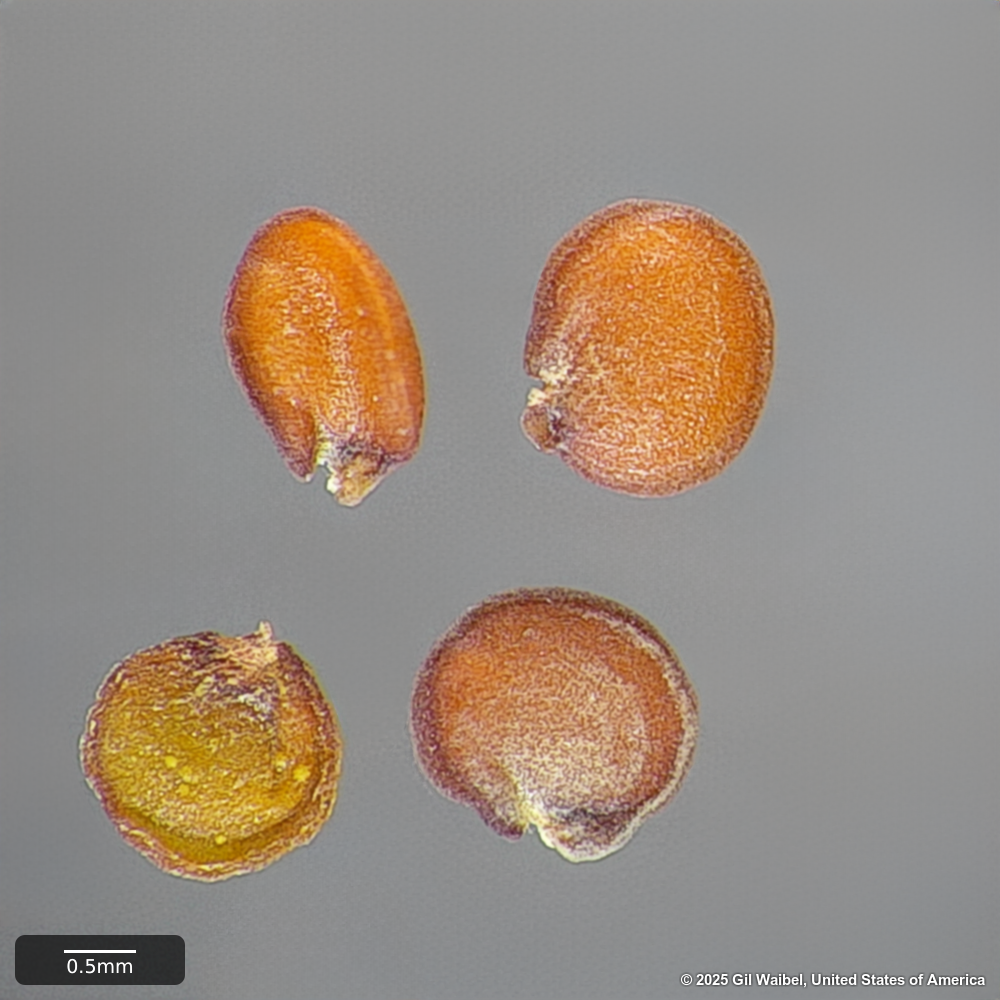
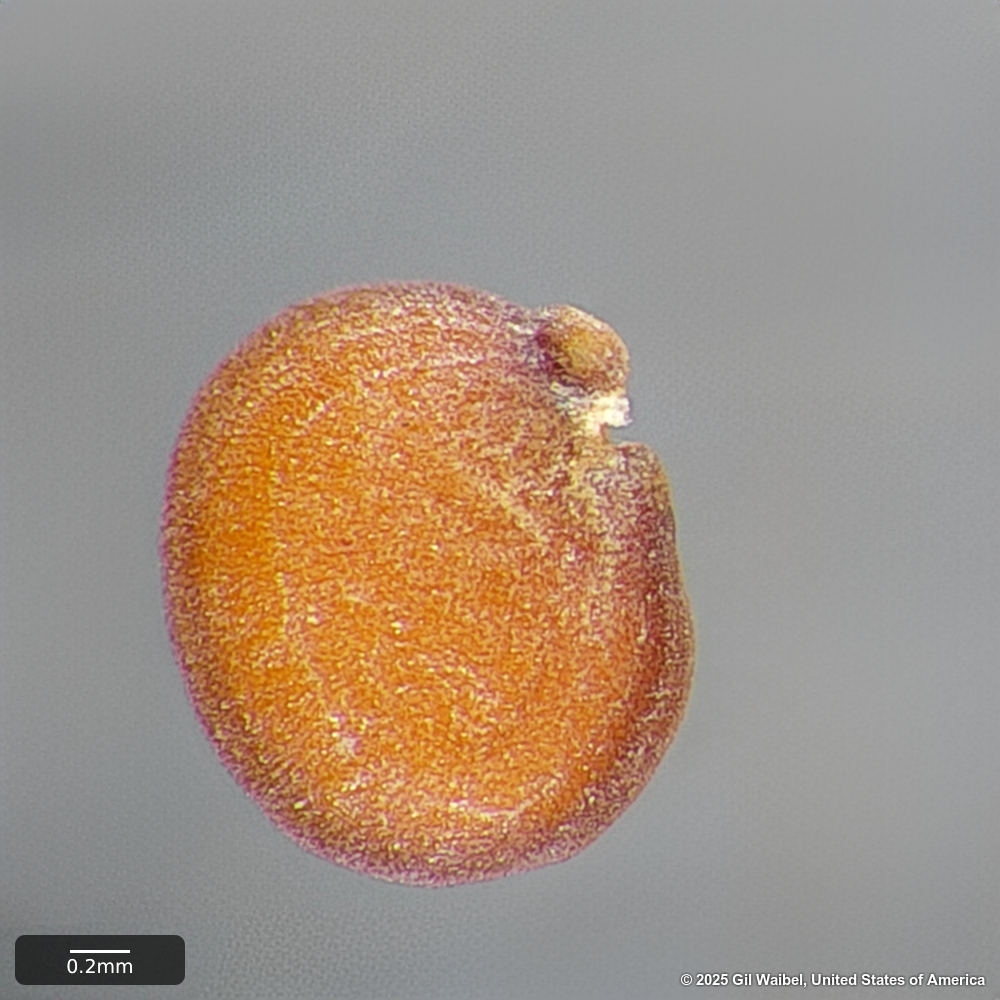
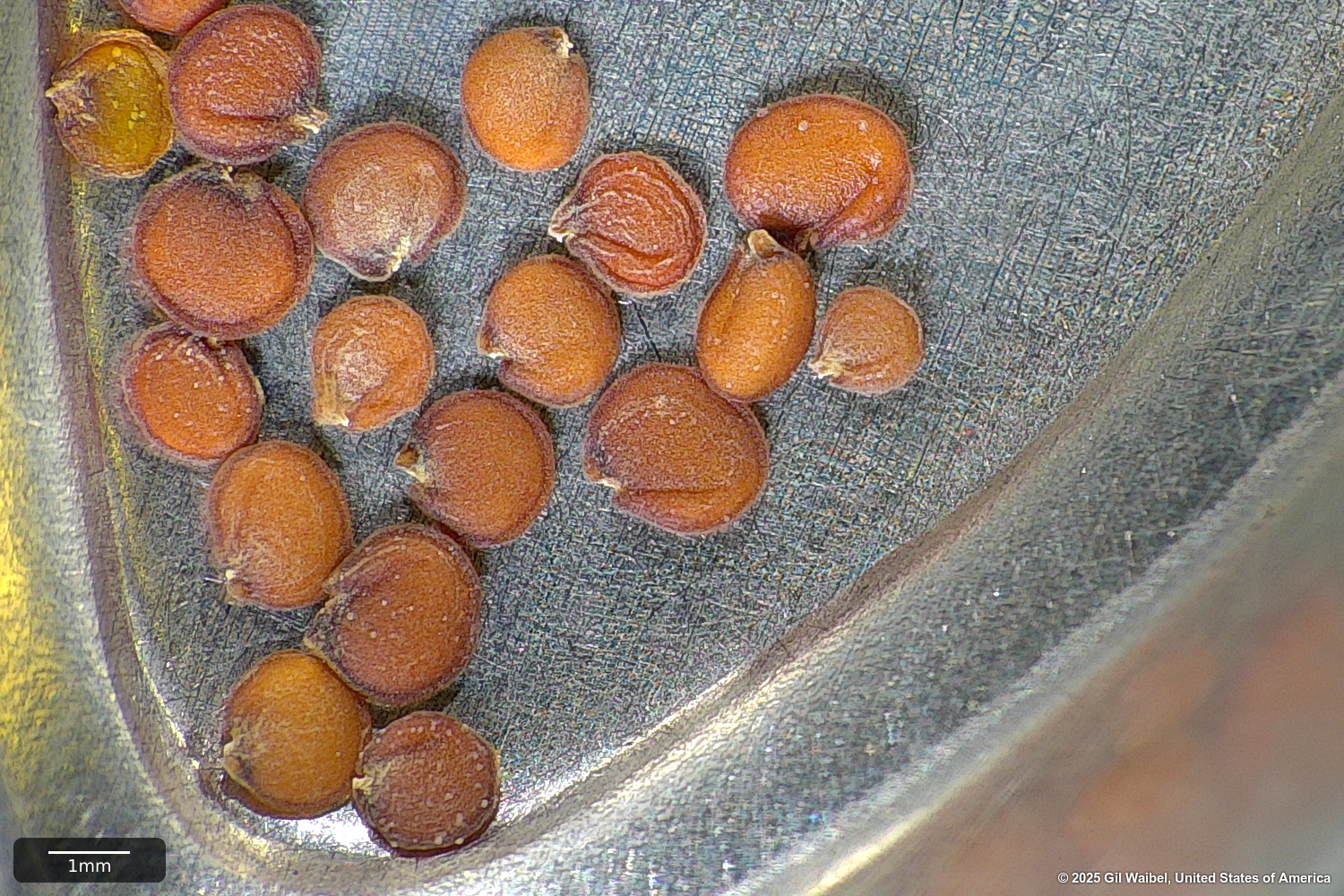
Purity
| Purity working weight | 2 g |
| Other species (OSD)/Noxious working weight | 20 g |
| ISTA PSD | PSD 11ISTA Chaffy: Non-Chaffy Seed, provided a portion of the testa is attached. Piece of seed larger than one-half the original size, provided a portion of the testa is attached. Fabaceae: cotyledons that are broken apart but held together within the testa. Seeds and pieces of seed entirely without testa are regarded as inert matter. Fabaceae: separated cotyledons are regarded as inert matter, irrespective of whether the radicle-plumule axis and/or more than half of the testa is attached. International Seed Testing Association. International Rules for Seed Testing (2026). |
| AOSA PSU | PSU 2AOSA Chaffy: Non-Chaffy Seed with at least a portion of the seed coat attached. Special considerations:
Association of Official Seed Analysts. AOSA rules for testing seeds (2025). |
Germination and dormancy breaking method
About this Method
Applicable for:
| Media | Agar or paper: top of blotters in tight moisture containing box |
| Moistened with | H2O normal moisture level |
| Additional dormancy breaking process | Not needed |
| Germination Temperature | 20°C |
| Day/Night Temperature | 8 and 16 hours °C |
| Hours Light/Dark | 8 and 16 hours °C |
| Days in warm | 14 days |
No images found.
Seedling evaluation
Normal Seedlings
BRASSICACEAE (Seedling type E; Seedling Group A-2-1-1-1 adapted from ISTA):
Dicotyledons with epigeal germination without epicotyl elongation; the primary root is essential. Food reserves are contained in the cotyledons.
Normal seedlings: all essential structures are normal, as detailed in the following:
- The primary root is intact or shows acceptable defects (discolored or necrotic spots, healed cracks and splits, superficial cracks and splits not affecting the conducting tissues)
- The hypocotyl is intact or shows acceptable defects (discolored or necrotic spots, healed cracks and splits, superficial cracks and splits not affecting the conducting tissues, loose twists)
- The terminal bud and surrounding tissue (usually not visible) is intact
- The cotyledons are intact or show acceptable defects (up to 50% of tissue not functioning normally, only one (intact) cotyledon, three cotyledons)
seedling, seedlings
- Seedling. A young plant developing from the embryo of a seed. Association of Official Seed Analysts (AOSA) Rules for Seed Testing, Volume 4, 2019
epigeal, epigeal germination
- Epigeal. Cotyledons borne above the ground after germination (see hypogeal). Fenwick, J.R. revised 1995. Laboratory Manual for General Crops- Glossary. Unpublished class notes. Dept. of Soil and Crop Sciences, Colorado State University. Pages 104-111
- Epigeal germination. A type of germination in which cotyledons are carried above soil level by the elongating hypocotyl (see hypogeal germination). Association of Official Seed Analysts (AOSA) Rules for Seed Testing, Volume 4, 2019
epicotyl, epicotyls
- Epicotyl. In Dicotyledons and gymnosperms, the epicotyl includes all seedling structures above the cotyledons. In species with epigeal germination (e.g. Phaseolus vulgaris), the epicotyl, cotyledons and part of the hypocotyl emerge from the soil. In species with hypogeal germination (e.g. Pisum sativum), only the epicotyl emerges, carrying the first foliage leaves above the soil surface. In these species, the epicotyl also bears one or more scale leaves. Dormant meristematic buds in the axils of these scale leaves become active if there is damage to the terminal bud. The conducting tissue of the epicotyl transfers water and nutrients from the hypocotyl and cotyledons to the leaves and terminal bud above. Association of Official Seed Analysts (AOSA) Rules for Seed Testing, Volume 4, 2019
- Epicotyl. The stem of the embryo or young seedling above the cotyledons. Fenwick, J.R. revised 1995. Laboratory Manual for General Crops- Glossary. Unpublished class notes. Dept. of Soil and Crop Sciences, Colorado State University. Pages 104-111
primary root
- Primary root. The root that develops directly from the hypocotyl of the embryo. Fenwick, J.R. revised 1995. Laboratory Manual for General Crops- Glossary. Unpublished class notes. Dept. of Soil and Crop Sciences, Colorado State University. Pages 104-111
cotyledon, cotyledons
- Cotyledon. The first leaf or pair of leaves of an embryo and seedling, often a food-storage organ. The cotyledons may remain in the seed (hypogeal germination) or emerge to become the first photosynthetic organs (epigeal germination). ISTA Handbook on Pure Seed Definitions, Glossary. 3rd Edition 2010.
- Cotyledons. The cotyledons are the storage structures of the embryo. They may be only a small portion of the seed in species with endosperm, perisperm or female gametophyte storage tissue, or they may occupy a large portion of the embryo when they are the primary storage tissue (e.g. Phaseolus vulgaris). In epigeal species, the cotyledons may grow quite large and become the first photosynthetic structures of the young plant. In hypogeal species the primary function of the cotyledons is to provide nutrients to the growing seedling until it can produce its own nutrients. In most species the cotyledons shrivel and drop off as their reserves are depleted. In a few species (e.g. Cucurbita pepo, pumpkin) the cotyledons may persist well beyond the seedling stage of growth. In the monocotyledons the cotyledon absorbs nutrients from the endosperm and transfers them to the growing seedling. In the Poaceae the cotyledon is called the scutellum. It is in close proximity to the endosperm and is laterally attached to the embryo axis. In Allium (Liliaceae) the cotyledon tip remains embedded in the endosperm to absorb nutrients but the cotyledon also emerges from the soil (i.e. germination is epigeal) and becomes photosynthetic. Association of Official Seed Analysts (AOSA) Rules for Seed Testing, Volume 4, 2019
- Cotyledon. The first leaves of the embryo that serve for food digestion and food storage. Fenwick, J.R. revised 1995. Laboratory Manual for General Crops- Glossary. Unpublished class notes. Dept. of Soil and Crop Sciences, Colorado State University. Pages 104-111
essential structure, essential structures
- Essential structure. Structure which is critical for continued development of the seedling into a plant. SCST Seed Technologist Training Manual. 2018
- Essential structure. Any seedling structure that must be considered when classifying a seedling as either normal or abnormal. In general, an essential structure is one that is critical for successful establishment and development of a seedling into a plant. Structure which is critical for continued development of the seedling into a plant. Baalbaki, R.Z. Germination & Dormancy. TWS Website. 2020
normal seedling, normal
- Normal seedling. A seedling with all essential structures present and capable of developing into a plant under favorable conditions; certain defects may be present if they are judged to be not so severe as to impede further development of the plant (see abnormal seedling). Association of Official Seed Analysts (AOSA) Rules for Seed Testing, Volume 4, 2019
root, roots
- Root. In dicotyledons and gymnosperms, the root system serves three major functions: (1) to anchor the plant in the soil, (2) to absorb water and dissolved salts from the soil and (3) to conduct the water and salts to the hypocotyl, cotyledons and epicotyl. The embryonic root, or radicle, is located at the basal end of the embryo and is usually the first seedling structure to rupture the testa. After emergence it is referred to as the primary root. The primary root elongates rapidly and soon numerous root hairs develop, greatly increasing the absorbing surface of the roots. As the seedling continues to grow, secondary roots develop from the primary root and from other secondary roots. Roots may also emerge from other structures (e.g. the hypocotyl) and are referred to as adventitious roots. As in the dicotyledons, the monocotyledon root system serves to anchor the plant in soil, absorb water and dissolved salts from the soil and to conduct the water and salts to the growing seedling. The embryonic root, or radicle, is situated at the basal end of the embryo and, in the case of the Poaceae, its apex is covered by the coleorhiza. After the radicle emerges it is referred to as the primary root. In some species of the Poaceae (e.g. Triticum) the primary root is indistinguishable from the other roots that develop from the scutellar node region and hence all of these are referred to as seminal roots. Roots that develop from structures above the scutellar or cotyledonary node are called adventitious roots. Secondary roots may develop from seminal and adventitious roots. Association of Official Seed Analysts (AOSA) Rules for Seed Testing, Volume 4, 2019
- Root. A portion of a higher plant bearing neither leaves nor reproductive organs, usually underground. Fenwick, J.R. revised 1995. Laboratory Manual for General Crops- Glossary. Unpublished class notes. Dept. of Soil and Crop Sciences, Colorado State University. Pages 104-111
conducting tissues
- Conducting tissues. Tissues that transport water and dissolved minerals from the root to the other plant structures, and foods from where they are manufactured (e.g., leaves) to where they are needed for growth or storage. Association of Official Seed Analysts (AOSA) Rules for Seed Testing, Volume 4, 2019
hypocotyl
- Hypocotyl. The portion of the seedling axis between the root and the cotyledons is the hypocotyl. The hypocotyl is a transition structure for the transport of water and dissolved salts from the roots to the epicotyl. When a seed with epigeal germination (see section 2.5 for definitions of epigeal and hypogeal germination) is planted in moist soil, the hypocotyl elongates carrying the cotyledons above the soil surface.
In monocotyledons the hypocotyl is usually not discernible as a separate structure. The mesocotyl is the part of the seedling axis between the scutellum and the base of the coleoptile. In some species (e.g. Zea mays) the elongation of the mesocotyl may be considerable. In others (e.g. Triticum aestivum) the elongation may be imperceptible. Elongation of the mesocotyl is suppressed by light after the coleoptile emerges from the soil. Association of Official Seed Analysts (AOSA) Rules for Seed Testing, Volume 4, 2019 - Hypocotyl. That portion of the embryo stem below the cotyledons. Fenwick, J.R. revised 1995. Laboratory Manual for General Crops- Glossary. Unpublished class notes. Dept. of Soil and Crop Sciences, Colorado State University. Pages 104-111
terminal bud
- Terminal bud. The shoot apex enveloped by several more or less differentiated leaves. ISTA Handbook on Pure Seed Definitions, Glossary. 3rd Edition 2010
- Terminal bud. The terminal bud occupies the tip of the epicotyl and consists of the apical meristem surrounded and protected by the developing leaves. Association of Official Seed Analysts (AOSA) Rules for Seed Testing, Volume 4, 2019
cotyledon, cotyledons
- Cotyledon. The first leaf or pair of leaves of an embryo and seedling, often a food-storage organ. The cotyledons may remain in the seed (hypogeal germination) or emerge to become the first photosynthetic organs (epigeal germination). ISTA Handbook on Pure Seed Definitions, Glossary. 3rd Edition 2010.
- Cotyledons. The cotyledons are the storage structures of the embryo. They may be only a small portion of the seed in species with endosperm, perisperm or female gametophyte storage tissue, or they may occupy a large portion of the embryo when they are the primary storage tissue (e.g. Phaseolus vulgaris). In epigeal species, the cotyledons may grow quite large and become the first photosynthetic structures of the young plant. In hypogeal species the primary function of the cotyledons is to provide nutrients to the growing seedling until it can produce its own nutrients. In most species the cotyledons shrivel and drop off as their reserves are depleted. In a few species (e.g. Cucurbita pepo, pumpkin) the cotyledons may persist well beyond the seedling stage of growth. In the monocotyledons the cotyledon absorbs nutrients from the endosperm and transfers them to the growing seedling. In the Poaceae the cotyledon is called the scutellum. It is in close proximity to the endosperm and is laterally attached to the embryo axis. In Allium (Liliaceae) the cotyledon tip remains embedded in the endosperm to absorb nutrients but the cotyledon also emerges from the soil (i.e. germination is epigeal) and becomes photosynthetic. Association of Official Seed Analysts (AOSA) Rules for Seed Testing, Volume 4, 2019
- Cotyledon. The first leaves of the embryo that serve for food digestion and food storage. Fenwick, J.R. revised 1995. Laboratory Manual for General Crops- Glossary. Unpublished class notes. Dept. of Soil and Crop Sciences, Colorado State University. Pages 104-111
Abnormal Seedlings
Abnormal seedlings: one or more of the essential structures are abnormal, as detailed in the following:
- The seedling is deformed, fractured, the cotyledons emerge before the primary root from the seed coat, consists of fused twin seedlings, is yellow or white, is spindly, is glassy, or is decayed as a result of primary infection
- The primary root is stunted or stubby, retarded, missing, broken, split from the tip, trapped in the seed coat (unless the root tip has found its way out of the seed coat by the end of the test), shows negative geotropism, is constricted, spindly, glassy, or decayed as a result of primary infection. A seedling is classified as abnormal if the primary root is defective, even if secondary roots have developed.
- The hypocotyl is too short and thick, deeply cracked and broken (affecting the conducting tissue), split right through, missing, bent over or forming a loop, tightly twisted or forming a spiral, constricted, spindly, glassy, or decayed as a result of primary infection
- The terminal bud (usually not visible) is defective
- The cotyledons are defective to the extent that less than 50% of the original tissue is functioning normally, are swollen or curled, deformed, broken or otherwise damaged, separate or missing, discolored or necrotic, glassy, or decayed as a result of primary infection. Damage or decay of the cotyledons at the point of attachment to the seedling axis or near the terminal bud render a seedling abnormal – irrespective of the 50% rule.
essential structure, essential structures
- Essential structure. Structure which is critical for continued development of the seedling into a plant. SCST Seed Technologist Training Manual. 2018
- Essential structure. Any seedling structure that must be considered when classifying a seedling as either normal or abnormal. In general, an essential structure is one that is critical for successful establishment and development of a seedling into a plant. Structure which is critical for continued development of the seedling into a plant. Baalbaki, R.Z. Germination & Dormancy. TWS Website. 2020
abnormal seedling, abnormal
- Abnormal seedling. A seedling that does not have all the essential structures or is damaged, deformed or decayed to such an extent that normal development is prevented (see normal seedling). Association of Official Seed Analysts (AOSA) Rules for Seed Testing, Volume 4, 2019
seedling, seedlings
- Seedling. A young plant developing from the embryo of a seed. Association of Official Seed Analysts (AOSA) Rules for Seed Testing, Volume 4, 2019
cotyledon, cotyledons
- Cotyledon. The first leaf or pair of leaves of an embryo and seedling, often a food-storage organ. The cotyledons may remain in the seed (hypogeal germination) or emerge to become the first photosynthetic organs (epigeal germination). ISTA Handbook on Pure Seed Definitions, Glossary. 3rd Edition 2010.
- Cotyledons. The cotyledons are the storage structures of the embryo. They may be only a small portion of the seed in species with endosperm, perisperm or female gametophyte storage tissue, or they may occupy a large portion of the embryo when they are the primary storage tissue (e.g. Phaseolus vulgaris). In epigeal species, the cotyledons may grow quite large and become the first photosynthetic structures of the young plant. In hypogeal species the primary function of the cotyledons is to provide nutrients to the growing seedling until it can produce its own nutrients. In most species the cotyledons shrivel and drop off as their reserves are depleted. In a few species (e.g. Cucurbita pepo, pumpkin) the cotyledons may persist well beyond the seedling stage of growth. In the monocotyledons the cotyledon absorbs nutrients from the endosperm and transfers them to the growing seedling. In the Poaceae the cotyledon is called the scutellum. It is in close proximity to the endosperm and is laterally attached to the embryo axis. In Allium (Liliaceae) the cotyledon tip remains embedded in the endosperm to absorb nutrients but the cotyledon also emerges from the soil (i.e. germination is epigeal) and becomes photosynthetic. Association of Official Seed Analysts (AOSA) Rules for Seed Testing, Volume 4, 2019
- Cotyledon. The first leaves of the embryo that serve for food digestion and food storage. Fenwick, J.R. revised 1995. Laboratory Manual for General Crops- Glossary. Unpublished class notes. Dept. of Soil and Crop Sciences, Colorado State University. Pages 104-111
primary root
- Primary root. The root that develops directly from the hypocotyl of the embryo. Fenwick, J.R. revised 1995. Laboratory Manual for General Crops- Glossary. Unpublished class notes. Dept. of Soil and Crop Sciences, Colorado State University. Pages 104-111
seed, seeds
- Seed. The part of a plant which is able to develop into a new plant. ISTA Handbook on Pure Seed Definitions, Glossary. 3rd Edition 2010
- Seed. Botanically, a seed is a mature fertilized ovule containing an embryonic plant; usually it has nutrient storage tissue and is surrounded by a protective coat, the testa. This structure is a "true seed"; however, the ovules of many species have additional structures of the mother plant attached or fused to the seed coat. For example, the "seed" of Triticum aestivum (wheat) is botanically a fruit because the pericarp (ovary wall) is fused with the seed coat. In these rules the term "seed" will be used in the agronomic sense (i.e. the true seed plus any accessory structures that may be attached when it is planted in the field; see section 3.2 of the AOSA Rules for Testing Seeds Vol. 1). Association of Official Seed Analysts (AOSA) Rules for Seed Testing, Volume 4, 2019
- Seed. The ripened ovule, enclosing the rudimentary plant and food necessary for its germination. Fenwick, J.R. revised 1995. Laboratory Manual for General Crops- Glossary. Unpublished class notes. Dept. of Soil and Crop Sciences, Colorado State University. Pages 104-111
seedling, seedlings
- Seedling. A young plant developing from the embryo of a seed. Association of Official Seed Analysts (AOSA) Rules for Seed Testing, Volume 4, 2019
spindly
- Spindly. Disproportionately thin relative to length; thread-like in appearance. Association of Official Seed Analysts (AOSA) Rules for Seed Testing, Volume 4, 2019
primary infection
- Primary infection. Infection caused by disease organisms present and active in the seed and/or seedling itself. SCST Seed Technologist Training Manual, 2018
root, roots
- Root. In dicotyledons and gymnosperms, the root system serves three major functions: (1) to anchor the plant in the soil, (2) to absorb water and dissolved salts from the soil and (3) to conduct the water and salts to the hypocotyl, cotyledons and epicotyl. The embryonic root, or radicle, is located at the basal end of the embryo and is usually the first seedling structure to rupture the testa. After emergence it is referred to as the primary root. The primary root elongates rapidly and soon numerous root hairs develop, greatly increasing the absorbing surface of the roots. As the seedling continues to grow, secondary roots develop from the primary root and from other secondary roots. Roots may also emerge from other structures (e.g. the hypocotyl) and are referred to as adventitious roots. As in the dicotyledons, the monocotyledon root system serves to anchor the plant in soil, absorb water and dissolved salts from the soil and to conduct the water and salts to the growing seedling. The embryonic root, or radicle, is situated at the basal end of the embryo and, in the case of the Poaceae, its apex is covered by the coleorhiza. After the radicle emerges it is referred to as the primary root. In some species of the Poaceae (e.g. Triticum) the primary root is indistinguishable from the other roots that develop from the scutellar node region and hence all of these are referred to as seminal roots. Roots that develop from structures above the scutellar or cotyledonary node are called adventitious roots. Secondary roots may develop from seminal and adventitious roots. Association of Official Seed Analysts (AOSA) Rules for Seed Testing, Volume 4, 2019
- Root. A portion of a higher plant bearing neither leaves nor reproductive organs, usually underground. Fenwick, J.R. revised 1995. Laboratory Manual for General Crops- Glossary. Unpublished class notes. Dept. of Soil and Crop Sciences, Colorado State University. Pages 104-111
root tip, root tips
- Root tip. Root tips will grow into tap roots or fibrous roots. A root tip is protected by a root cap. Within a root tip, cell: differentiation, actively dividing and increasing in length, depending on the zone of the root tip.
negative geotropism
- Negative geotropism. Negative geotropism is caused by a physiological disorder usually characterized by root structures that grow upward. Association of Official Seed Analysts (AOSA) Rules for Seed Testing, Volume 4, 2019
infection
- Infection. Entrance and spread of disease organisms in living material (e.g., seedling structures) often causing disease symptoms and decay. Association of Official Seed Analysts (AOSA) Rules for Seed Testing, Volume 4, 2019
root, roots
- Root. In dicotyledons and gymnosperms, the root system serves three major functions: (1) to anchor the plant in the soil, (2) to absorb water and dissolved salts from the soil and (3) to conduct the water and salts to the hypocotyl, cotyledons and epicotyl. The embryonic root, or radicle, is located at the basal end of the embryo and is usually the first seedling structure to rupture the testa. After emergence it is referred to as the primary root. The primary root elongates rapidly and soon numerous root hairs develop, greatly increasing the absorbing surface of the roots. As the seedling continues to grow, secondary roots develop from the primary root and from other secondary roots. Roots may also emerge from other structures (e.g. the hypocotyl) and are referred to as adventitious roots. As in the dicotyledons, the monocotyledon root system serves to anchor the plant in soil, absorb water and dissolved salts from the soil and to conduct the water and salts to the growing seedling. The embryonic root, or radicle, is situated at the basal end of the embryo and, in the case of the Poaceae, its apex is covered by the coleorhiza. After the radicle emerges it is referred to as the primary root. In some species of the Poaceae (e.g. Triticum) the primary root is indistinguishable from the other roots that develop from the scutellar node region and hence all of these are referred to as seminal roots. Roots that develop from structures above the scutellar or cotyledonary node are called adventitious roots. Secondary roots may develop from seminal and adventitious roots. Association of Official Seed Analysts (AOSA) Rules for Seed Testing, Volume 4, 2019
- Root. A portion of a higher plant bearing neither leaves nor reproductive organs, usually underground. Fenwick, J.R. revised 1995. Laboratory Manual for General Crops- Glossary. Unpublished class notes. Dept. of Soil and Crop Sciences, Colorado State University. Pages 104-111
hypocotyl
- Hypocotyl. The portion of the seedling axis between the root and the cotyledons is the hypocotyl. The hypocotyl is a transition structure for the transport of water and dissolved salts from the roots to the epicotyl. When a seed with epigeal germination (see section 2.5 for definitions of epigeal and hypogeal germination) is planted in moist soil, the hypocotyl elongates carrying the cotyledons above the soil surface.
In monocotyledons the hypocotyl is usually not discernible as a separate structure. The mesocotyl is the part of the seedling axis between the scutellum and the base of the coleoptile. In some species (e.g. Zea mays) the elongation of the mesocotyl may be considerable. In others (e.g. Triticum aestivum) the elongation may be imperceptible. Elongation of the mesocotyl is suppressed by light after the coleoptile emerges from the soil. Association of Official Seed Analysts (AOSA) Rules for Seed Testing, Volume 4, 2019 - Hypocotyl. That portion of the embryo stem below the cotyledons. Fenwick, J.R. revised 1995. Laboratory Manual for General Crops- Glossary. Unpublished class notes. Dept. of Soil and Crop Sciences, Colorado State University. Pages 104-111
conducting tissues, conducting tissue
- Conducting tissues. Tissues that transport water and dissolved minerals from the root to the other plant structures, and foods from where they are manufactured (e.g., leaves) to where they are needed for growth or storage. Association of Official Seed Analysts (AOSA) Rules for Seed Testing, Volume 4, 2019
terminal bud
- Terminal bud. The shoot apex enveloped by several more or less differentiated leaves. ISTA Handbook on Pure Seed Definitions, Glossary. 3rd Edition 2010
- Terminal bud. The terminal bud occupies the tip of the epicotyl and consists of the apical meristem surrounded and protected by the developing leaves. Association of Official Seed Analysts (AOSA) Rules for Seed Testing, Volume 4, 2019
decay
- Decay. Break-down of organic tissue, usually associated with the presence of microorganisms. Association of Official Seed Analysts (AOSA) Rules for Seed Testing, Volume 4, 2019
axis
- Axis. The central line of any organ or the support of a group of organs; the main stem of an inflorescence, especially of a panicle. Fenwick, J.R. revised 1995. Laboratory Manual for General Crops- Glossary. Unpublished class notes. Dept. of Soil and Crop Sciences, Colorado State University. Pages 104-111
terminal
- Terminal. Extremity or upper bud, flower, or leaf. Fenwick, J.R. revised 1995. Laboratory Manual for General Crops- Glossary. Unpublished class notes. Dept. of Soil and Crop Sciences, Colorado State University. Pages 104-111
bud, buds
- Bud. An unexpanded flower or a rudimentary leaf, stem, or branch. Fenwick, J.R. revised 1995. Laboratory Manual for General Crops- Glossary. Unpublished class notes. Dept. of Soil and Crop Sciences, Colorado State University. Pages 104-111
Modified Germination
No modified germination information available.
Tetrazolium (TZ) Test Recommendations
| Representative Genera |
Alyssum, Arabis, Brassica, Camelina, Crambe, Lepidium, Nasturtium, Raphanus, Sinapis General Statement: Use a 30oC (temperatures between 20oC through 40oC will work -with the higher temperature staining the seeds faster).and usually to stain seed in a 1.0% tetrazolium solution (exceptions will be provided below). While four hours is an adequate period to stain many species, longer periods may be necessary to assure the seeds have completed the staining process. Flexibility is key to staining seeds of wild species. Dormancy levels and lipids and other factors in the seeds can affect the length of the staining period. seed, seeds
seed, seeds
species
dormant seeds, dormancy
|
| Notes | TEZ/TZ tests in the Brassicaceae can be performed by removing the embryos from their soft seed coats after a time of soaking. embryo, embryos
seed, seeds
|
| Pre-Treatment | Soak for 18 hours in water at 20°C or 5 hours in water at 30°C.
|
| Preparation | Incise seed coat crosswise at one side of the outer cotyledons, avoid touching the hypocotyl and the radicle. Remove seed coat by gently pressing. Keep seed moist during the preparation. incise
seed, seeds
crosswise
cotyledon, cotyledons
hypocotyl
radicle, radicles
|
| Staining | 1.0% TEZ/TZ solution at 30°C for 18 hours. |
| Evaluation | Non-viable if radicle, radicle attachment, or cotyledons are left unstained and if yellow color of embryo remains apparent. viable
radicle, radicles
cotyledon, cotyledons
embryo, embryos
|
No images found.